Businessman Condemns Environmental Double Standards in Lake Macquarie
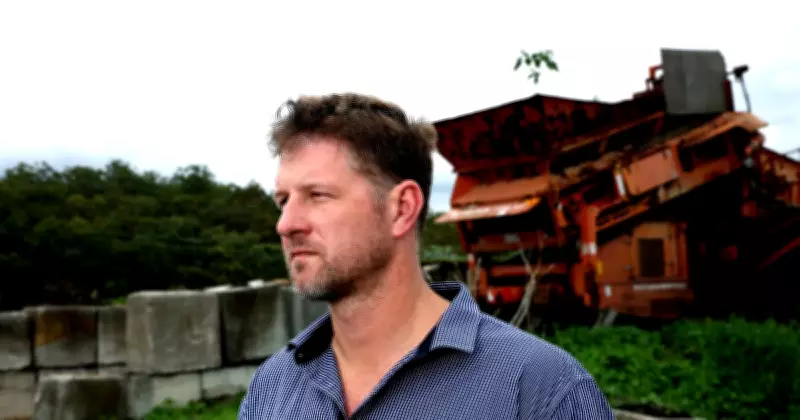
Damien Jensen, owner of the JET Group, has voiced profound disgust over what he describes as glaring double standards employed by the NSW Environment Protection Authority (EPA) and Lake Macquarie City Council. His comments follow revelations that the council-owned Awaba Waste Management Facility has been leaking contaminants for at least nine years, while his own green waste recycling operation faced severe regulatory scrutiny.
Horror Story of Pollution at Awaba Tip
Recent reports have uncovered alarming data from the Awaba tip, where testing sites recorded ammonia levels in 2025 that exceeded recommended Australian and New Zealand guidelines by more than 1000 times. The guidelines stipulate a safe level of 0.9 milligrams per litre for fresh and marine water quality.
The source of this contamination is a leak in the facility's leachate dam, which was first reported to the NSW EPA back in 2017. Despite this, the EPA has stated it is confident that no pollution has migrated off-site from the Awaba Waste Management Facility.

Jensen's Legal Battles and Business Struggles
In stark contrast, Mr Jensen's business, which operates as Oz Landscape Supplies, has endured rigorous enforcement actions. In 2022, the JET Group was raided three times by the EPA and had its licence suspended due to groundwater ammonia readings that were ten times higher than guideline values downstream.
Although the company ultimately won its case in the NSW Land and Environment Court, it has faced ongoing challenges. After submitting a modified development application to Lake Macquarie City Council to operate at a reduced capacity, council staff recommended refusal. However, a coalition of Liberal and independent councillors narrowly approved the application with a 7-6 vote, while Labor councillors opposed it.
The JET Group continues to negotiate the removal of certain consent conditions for its Nomad Road site, adding to the protracted nature of its regulatory ordeal.
Outrage Over Inconsistent Enforcement
"It makes me feel physically sick to think Lake Macquarie City Council and the EPA have both allowed pollution to leave the Awaba tip site into groundwater and surface water for more than 13 years," Mr Jensen declared. He emphasised the disparity in treatment, noting that his "tiny green waste recycling operation" was shut down in May 2023 over potential ammonia risks, while the council's tip nearby has leaked ammonia at extreme levels without similar intervention.
"After millions of dollars in the Land and Environment Court, it was proved ammonia had never left our site and there was next to no risk of it happening," he added. "Meanwhile, the council's tip a stone's throw away has continually leaked ammonia into groundwater at levels up to 1000 times the guidelines without any intervention, ramifications or closure from the EPA."
Political Support and Calls for Fairness
Liberal West Ward councillor Jason Pauling, who advocated for the JET Group's application, acknowledged the unfairness in scrutiny levels. "We were applying apples and oranges in levels of scrutiny in fairly similar circumstances and that seemed inherently unfair," Cr Pauling remarked. He criticised the council's "holier-than-thou approach" towards Mr Jensen's business while neglecting its own environmental issues.
"We all aspire to high standards; I get that. However, we need to be consistent to have reasonable credibility," he concluded, highlighting the need for equitable regulatory practices.
EPA Response and Remediation Efforts
In response to inquiries, a NSW EPA spokesperson reiterated that regulatory actions are tailored to specific circumstances, stating there is no "one-size-fits-all" approach to non-compliance. The authority also outlined ongoing efforts to address the pollution at the Awaba tip through a pollution reduction program.
This initiative includes relining the leachate pond, installing aerators, and constructing a spillway and groundwater extraction bores. These remediation works are scheduled for completion by October 1, 2027, aiming to mitigate the elevated ammonia levels detected on-site.

The situation underscores ongoing tensions between small businesses and regulatory bodies in New South Wales, raising questions about consistency and fairness in environmental enforcement across the region.