Beach visitors across South Australia are reporting persistent health issues, contradicting official declarations that coastal waters are now safe for swimming after months of a devastating toxic algal bloom.
App Declares Safety as Symptoms Persist
The concerns emerge alongside explosive allegations from a prominent citizen scientist, who claims government researchers have been instructed to slow down investigations into the bloom's cause until after the March state election – an accusation the state government vehemently denies.
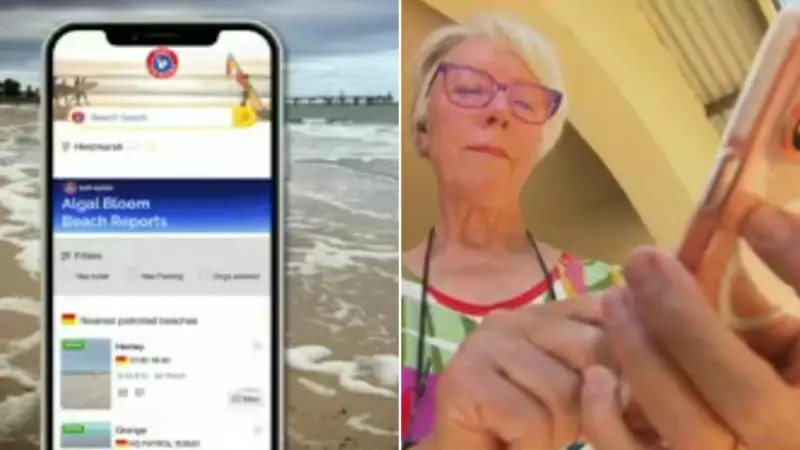
Toorak Gardens resident and research volunteer Sue Belperio, who regularly visits the affected bays, has long depended on the official Beachsafe app to manage her health. She claims the app, which monitors bloom activity and associated risk levels, can no longer be trusted.

"I often get a scratchy throat needing lozenges… some coughing… but I always get a runny nose," Belperio told 7NEWS, describing symptoms she links to the bloom that appear even when the app lists conditions as clear.
She cited a specific instance in December at Glenelg, where visible foam was present on the water despite the app registering a 'clear' status. "So the Beachsafe app is really not worth the money that’s being spent on it," she concluded.
Allegations of a Political Pause on Science
Fellow beachgoer and ecologist Faith Coleman, a key citizen scientist throughout the crisis, used parliamentary privilege on Tuesday to make serious claims. She alleged that staff across three separate government departments told her they had been asked not to investigate or discuss the cause of the algal bloom until after the March election.
"Three departmental staff have told me over the last few months that they have been asked not to investigate or discuss the cause of this algal bloom," Coleman claimed.
The government has dismissed these claims as "hearsay." Department for Environment executive director Mike Steer defended his team's work, stating they had been working intensely to find the cause and that he was applying considerable pressure to the investigation.
Labor MP Lucy Hood also rejected the allegation, asserting, "The fact is the government has put our foot on the accelerator when it comes to science and research."
A Lingering Ecological Disaster
The massive algal bloom, which at its peak was estimated to have covered approximately 4500 square kilometres, has been an ecological catastrophe. First detected in March last year, it has caused the deaths of thousands of fish and other marine life, with regular reports of rotten carcasses washing up on popular beaches.
Authorities gave the all-clear last month for multiple beach sites, reporting zero levels of the harmful algal species Karenia. However, the experiences of regular beach users like Belperio and Coleman suggest the situation may be more complex than official readings indicate.
Coleman warned that consistent official messaging declaring the problem over may have created a false sense of security among the public. "There’s also been some very clear messaging about it not being a problem, and I suspect that’s lulled many of us into a false sense of security," she said.
The situation leaves South Australian residents caught between official assurances and their own deteriorating health experiences, with the shadow of the upcoming state election now looming over the scientific investigation into one of the state's most significant environmental events in recent years.