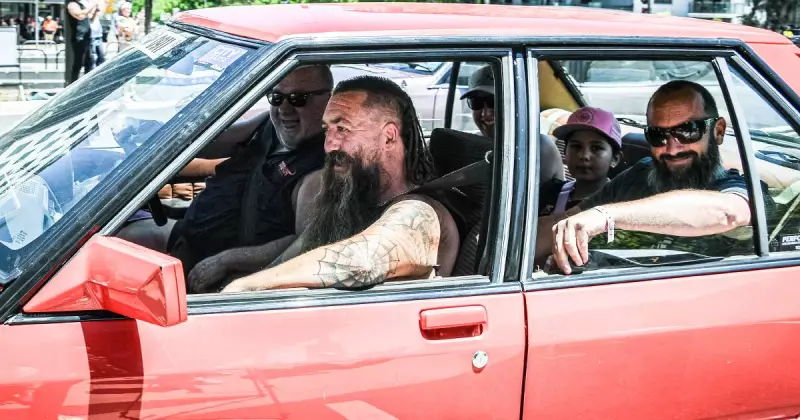
The annual Summernats festival in Canberra has once again sparked fierce debate among residents, with a prominent letter to The Canberra Times calling for the event to "move on for good." The sentiment, expressed by Liam Jones of Hackett on January 10, 2026, reflects a growing frustration with the automotive festival's impact on the nation's capital.
Summernats: A Divisive Canberra Tradition
Jones likened the yearly influx of modified cars and enthusiasts to a forced migration, contrasting it with natural wonders like the monarch butterfly or wildebeest. He expressed despair for local police, whom he believes are diverted from core duties to manage festival-related misbehaviour. "I know I speak for most Canberrans when I say it is high time the herd moves on for good," Jones wrote.
The letter highlights a perennial tension in the city. While Summernats has its ardent supporters and provides a significant economic boost, critics argue it transforms Canberra's "garden city" into scenes reminiscent of "Mad Max: Fury Road." The debate centres on community disruption, public safety, and the identity of the capital.

Global Shockwaves from US Invasion of Venezuela
Beyond local issues, the letters page was dominated by international outrage following former US President Donald Trump's invasion of Venezuela and the kidnapping of its president, Nicolás Maduro. Multiple correspondents condemned the action as a violation of international law.
Peter McLoughlin of Monash drew direct parallels to Russia's invasion of Ukraine and the US war in Iraq, questioning the precedent set for powerful nations to act with impunity. "How could he now be shocked by anything China does in connection with Taiwan?" McLoughlin asked, criticising Australia's locked-in alliance with a US acting "irrationally."
John Ryan of Griffith pointed to the strategic motive, stating the principal aim was control of Venezuela's vast oil reserves, about a fifth of the world's total. He compared the intervention to the 1953 CIA-backed coup in Iran after oil nationalisation.
Ross Hudson of Mount Martha, Victoria, warned the invasion sends a "very dark message" to the world, effectively green-lighting aggression by powerful despots and causing anxiety in nations like Ukraine, Greenland, and Taiwan.
Local Tensions: Hate Crimes and Religious Discourse
The letters also tackled pressing domestic social issues. Ezza Lou of Cook challenged a previous correspondent's claim that only synagogues faced threats of hate-filled abuse. Lou cited significant increases in Islamophobic incidents across Australia since the Bondi terrorist attack, with Muslim groups taking security measures like sleeping in mosques.
Referencing a Charles Sturt University report, Lou noted that over half (58.2 per cent) of participating mosques experienced targeted violence between 2014 and 2019. The threat increased with public attention, such as media coverage or online opposition to mosque developments.
In a separate theological exchange, John Smith of Farrer responded to a letter on original sin, arguing that the concept speaks to a universal human conscience "subject to error," regardless of religious belief.
Community and Environment in Focus
Other correspondents shared observations on local wildlife and urban nature. R. McCallum of Higgins reflected on changing bird populations over 50 years, noting the decline of Indian mynas and sparrows, and the careful joy of feeding magpie families. "We need to find ways to offset vanishing spaces for our friends with feathers," McCallum urged, highlighting concerns for pollinators like bees.
The collection of letters, published on January 10, 2026, presents a snapshot of a community and a nation grappling with issues from hyper-local festivals to global geopolitics, underscoring the complex challenges facing Australia and its capital.