As bushfire season intensifies, the critical role of Canberra's rural fringe in shielding suburban homes has come into sharp focus. Property managers like Sean and Kim Adams, who oversee the 600-acre Canberra Equestrian Centre bordering the suburb of Chapman, stand on the frontline of this defence.
The vital buffer zone protecting the capital
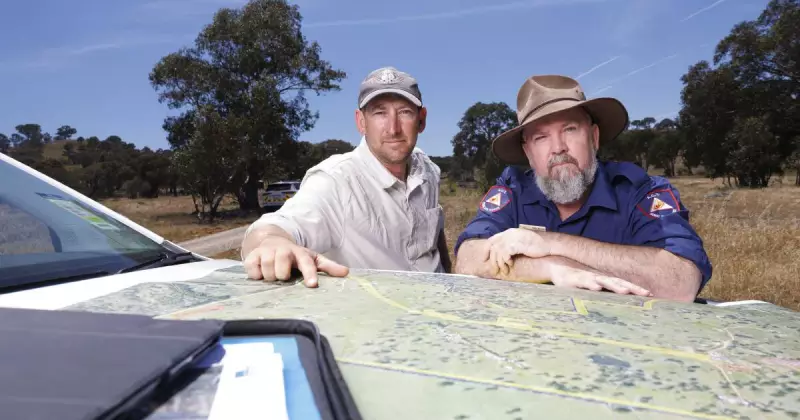
ACT Rural Fire Service (ACTRFS) officer Billy Brooks describes rural landholders as "the buffer zone" for Canberra. These properties are the first to confront campaign fires approaching from the north and west. "This is the very last place before [a fire] hits Canberra," Mr Brooks stated, emphasising the importance of their preparedness work for the wider community's protection.
The Adams family understands this responsibility intimately. Their centre suffered serious losses during the 2003 bushfires, an event marred by poor public awareness. Kim Adams recalls about 85 civilians on the property during the emergency, including people rushing to save horses and others dangerously taking photos. The aftermath included horse losses and substantial injuries. "It wasn't because people were deliberately being silly. It's just they had no idea," she explained.

Partnership and planning are key to preparedness
Now, the Adams work closely with the ACTRFS under its Farm Firewise program. This partnership involves developing detailed property maps that guide emergency responses. These plans outline boundary conditions, water sources, entry and exit points, roads suitable for fire trucks, and key assets.
Prioritisation is a crucial part of the plan. For instance, at the equestrian centre, homes are lower on the protection list compared to the stables and indoor arena. The arena houses valuable machinery and serves as an emergency rally point. Mr Brooks noted that while houses are often insurable, replacing inherited machinery like "granddad's old combine harvester" could cost up to $2 million and be far harder to insure.
For the Adams, clear communication and advanced warnings are vital. With the suburb of Chapman just a few hundred metres over a hill, evacuation timing is critical. "If they're evacuating Chapman, it's too late for us to relocate horses," Ms Adams said, noting it can take an hour for owners to reach the property, hook up a float, load their horse, and leave.
Understanding the grass fire threat
Fire behaviour officer Deborah Stanley demonstrates the rapid spread risk on rural properties. Pulling a dry stem of grass, she explained that cured (dead) grass is highly flammable. With the soil completely dry and seed heads high, a flame could reach almost five feet. A fire would move fast even over shorter, grazed grass.
Her role involves monitoring grass conditions, humidity, temperature, and wind speed across six sites to determine the ACT's fire danger ratings. She stressed that these ratings indicate how fast a fire is likely to spread, not the chance of ignition.
Properties also face biosecurity risks that influence fire danger. Vehicles entering can carry seedlings of invasive, highly flammable weeds like lovegrass, exacerbating the fuel load.
How the community can help
Authorities and landholders urge the public to assist in bushfire prevention through several key actions:
- Stay out if you are not expected on rural properties.
- Rural property holders should join the ACTRFS Farm Firewise program.
- Follow directions from property managers and never cut property fences.
- Have a bushfire safety plan for your family, property, and animals, including evacuation logistics.
- Conduct high-heat activities like welding indoors when fire danger ratings rise.
- Follow advice from ACTRFS emergency alerts on social media, texts, or the ACT Emergency Services Agency website.
- Stay informed using apps like Hazards Near Me (ACT) and Incidents Near Me (NSW).
With over 180 rural properties in the ACT, the work of officers like Billy Brooks and the vigilance of managers like the Adams family form a collaborative shield for Canberra. Their preparedness, as Mr Brooks summarised, is "all about doing as much as you can to stop fire from coming in, but also from leaving" the buffer zone and threatening suburban homes.