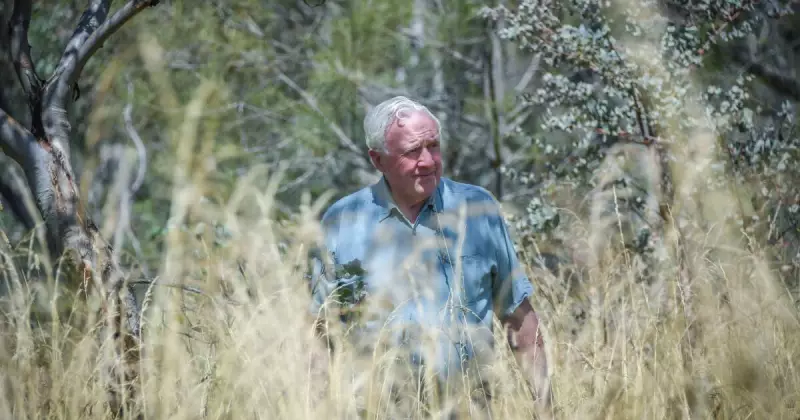
A veteran volunteer firefighter has issued a stark warning about dangerously high fuel loads in the bushland encircling North Canberra Hospital, describing the situation as "frightening" and a major risk to patients, staff, and infrastructure.
‘It’ll be a very savage fire’: Volunteer sounds alarm
Don Tarlinton, a volunteer rural firefighter with decades of experience, says an infestation of highly combustible African lovegrass runs along Belconnen Way at Bruce and continues across Haydon Drive into the hospital campus. This invasive grass can project flames up to 30 metres high if ignited.
"This fuel will actually kill people if they're anyway close to it, it'll be so hot. There's so much fuel," Mr Tarlinton said. "It'll be a very savage fire."

He inspected the area this week and found the situation unchanged from concerns first raised publicly in a letter to The Canberra Times by O’Connor resident Geoff Evans in February 2025. Mr Evans had warned the strip of bush between Belconnen Way and the hospital was "a sitting duck" covered in dry grass and litter, posing a severe challenge for any evacuation.
Cigarette butts and a single exit add to danger
Adding to the immediate risk, Mr Tarlinton found the overgrown bushland adjacent to the hospital's multi-storey car park is used as a retreat by smokers, with discarded cigarette butts littering the ground.
He warned that a single discarded cigarette, a spark from powerlines, or a vehicle fire could trigger a large, fast-moving blaze. He expressed particular concern about the car park, which has only one exit and sits beside a high-voltage transformer.
"I am sure Canberra will have one less hospital when we have high winds and high temperature, with an ember attack," Mr Tarlinton stated. He suggested smokers on campus should be provided with a safe, irrigated lawn area instead of being forced into the bush.
Government outlines planned mitigation work
An ACT Government spokesperson said an assessment of the area was completed in late 2025, and work to reduce fuel loads is scheduled under the Bushfire Operations Plan for 2025-26.
"Activities outlined in the BOP to be completed around the North Canberra Hospital campus include physically removing fuels behind Calvary Private and the multi-storey car park, and to north of Hyson Green," the spokesperson said.
The statement noted that while Asset Protection Zones were in reasonable condition and did not require prescribed burning, other mitigation treatments were planned. These include chemical treatment of regrowth and annual slashing of grass along management trails. The government assessed that the narrow strip of land south of Mary Potter Circuit was unlikely to see a fully developed fire that could reach vulnerable structures.
Lessons from 2003 firestorm ‘not learnt’
With the 23rd anniversary of Canberra's devastating 2003 firestorm falling on January 18, Mr Tarlinton said authorities appeared not to have learned key lessons about proactive fuel reduction.
"They haven't learnt any lessons at all," he said.
He highlighted that African lovegrass, which burns intensely and spreads fire rapidly even in mild conditions, is becoming a more frequent problem in the region. The weed is considered so hazardous in the Cooma area that roadside signs warn landholders: "Lovegrass fires can kill."
Mr Tarlinton's warning underscores the ongoing tension between urban development and bushfire management in the ACT, with critical infrastructure like hospitals remaining on the frontline of seasonal fire risk.