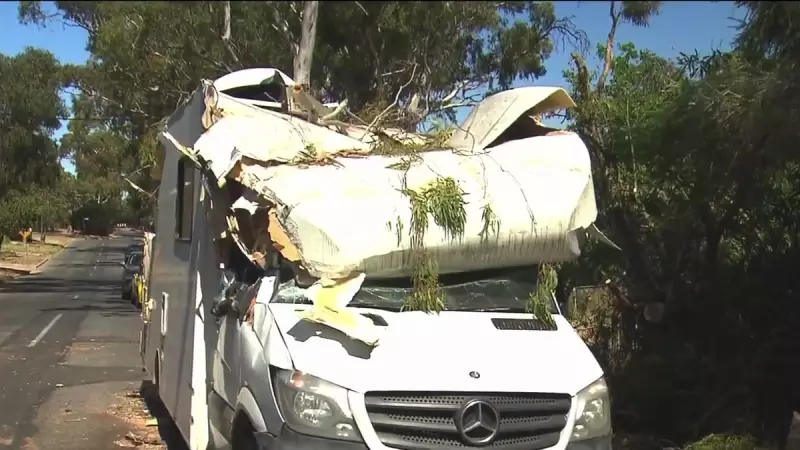
A South Australian man is counting his blessings after a terrifying incident where a massive gum tree collapsed onto his campervan while he was inside, leaving the vehicle completely destroyed.
A Night of Sudden Terror
Craig McLafferty, 52, was lying down inside his campervan in Tea Tree Gully, in Adelaide's north, on Tuesday night when disaster struck without any warning. The local man had been living in the vehicle among the gum trees for several years.
"Eyes were closed, didn't hear a crack, didn't hear anything. And all of a sudden, yeah, there were branches on my head," McLafferty recounted of the shocking moment. "I thought I was dead. To be honest, I thought I was dead."

Miraculous Escape and Community Response
The enormous tree fell directly through the roof, crumpling the structure of the campervan. Hearing the crash, neighbours rushed to help. They brought over a chair so McLafferty could climb out through a window.
Remarkably, he escaped the life-threatening situation with nothing more than a couple of minor scratches. "I'm okay. It's just a bit rattled through the whole thing. It's only just hitting home now, to tell you the truth," he said.
Neighbour Hannah Mitchell summed up the community's disbelief: "Pretty damn lucky. Yeah, it's hard to, looking at it, you wouldn't think he would have gotten out."
Long-Standing Safety Concerns Ignored
The incident has ignited local anger, with multiple residents revealing they had previously made complaints to the Tea Tree Gully Council about that specific gum tree, which they feared was a ticking time bomb.
"That tree's been a bone of contention around here for a long time," McLafferty confirmed. Another neighbour, Simon Mitchell, noted, "There's a fair few of them around the place that are kind of dropping limbs," highlighting a broader safety issue in the area.
In response, the council stated its policy is to inspect trees at least once every five years and that this particular tree appeared healthy during its last assessment in 2023. The shocking event has raised serious questions about the adequacy of such inspection cycles, especially for large eucalypts in populated areas.