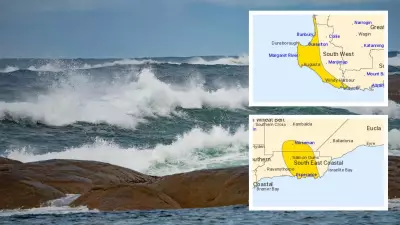
The resounding election victory for the Cook Labor Government has not absolved it of accountability for one of its most contentious environmental policies: the extended ban on catching demersal scalefish in the West Coast Bioregion. While the political landscape has shifted, the frustration and economic pain felt by recreational fishers, fishing businesses, and coastal communities remain a pressing issue.
A Mandate Does Not Equal Unquestioned Support
Despite securing a second term with an increased majority, the government cannot interpret this as a blanket endorsement of every policy decision. The demersal fishing ban, which was a central point of contention during the campaign, continues to be a source of significant community angst. The policy, aimed at rebuilding populations of prized fish like dhufish and pink snapper, has had profound side effects.
The ban, initially implemented for the peak season, was controversially extended to cover nine months of the year from Kalbarri to Augusta. This drastic measure, while scientifically justified by the Department of Primary Industries and Regional Development (DPIRD) to protect vulnerable stocks, has been criticised for its heavy-handed approach and the perceived lack of meaningful consultation with the recreational fishing sector prior to its announcement.

Economic and Social Fallout from the Policy
The consequences of the extended closure have rippled far beyond the water. Charter fishing operations have reported devastating losses in bookings and revenue, with some facing an existential threat. Businesses that rely on recreational fishing tourism, from tackle shops to accommodation providers in regional coastal towns, have also felt the pinch.
For many families and fishing enthusiasts, the ban has severed a cherished cultural and recreational tradition. The government's offer of alternative fishing opportunities, such as promoting other species, has done little to placate a community that feels its lifestyle and economic contributions have been disregarded. The perception remains that the recreational sector is bearing a disproportionate burden for stock recovery.
The Path Forward: Review and Refinement
Now, with the election concluded, the government must move from campaigning to governing with empathy and pragmatism. Key stakeholders are calling for a transparent and independent review of the ban's socio-economic impacts. There is a strong argument for investing more heavily in robust data collection—including improved recreational fishing surveys—to better inform future management decisions.
Furthermore, the government must explore more nuanced management tools. This could include a refined tag system for key demersal species, stricter size and bag limits, or spatially targeted closures, rather than a blanket ban across such a vast coastline. Engaging genuinely with recfishing representatives to co-design these solutions is crucial for rebuilding trust.
The health of WA's demersal fish stocks is undeniably important for long-term sustainability. However, effective environmental policy must balance ecological science with community wellbeing. The election result gives the government stability, but not a free pass. It now has a clear responsibility to listen, review, and refine its approach to ensure the future of fishing in Western Australia is both sustainable and inclusive.