In the smelliest corners of Australia's bushland, a unique scientific detective story is unfolding. Dr Keith Bayless, an insect expert with the CSIRO, has a job that takes him to public toilets and remote gullies, all in pursuit of a fly that vanished for decades.
The Vanishing Act of Clisa Australis
The target of this unusual quest is Clisa australis, a fly first documented deep inside a remote bat cave in northern New South Wales during the 1960s. It was occasionally seen near old-fashioned pit toilets before seemingly disappearing from the scientific record. One prevailing theory suggested that as Australia's sanitation improved and pit toilets were phased out, the fly lost its peculiar habitat.
Dr Bayless, who moved to Australia from the United States in 2018, became fascinated by the mystery. His initial plan to search the original cave was thwarted; it was too inaccessible, and the devastating 2019 bushfires further complicated access. Undeterred, the entomologist turned his attention to a more humble location: public dunnies in parks.

"I've checked the walls and ceilings of an embarrassing number of public toilets in parks," Dr Bayless admitted. The locations were strategic. "They're often near car parks, so it's easy to pop over and check. You don't have to tell everyone you're looking for flies instead of using the facilities."
A Stinky Breakthrough South of Canberra
For years, the search yielded nothing. The breakthrough came unexpectedly from a routine insect trap. "It was nestled under land leeches in a sample from a dark, humid gully," Dr Bayless revealed. The elusive Clisa australis had been found, not in northern NSW, but much further south near Lake George, close to the Australian Capital Territory.
More specimens gradually appeared, presenting a new puzzle: why had they reappeared, and why had they moved so far south? Dr Bayless is investigating two leading theories. The first points to environmental shifts driven by global warming and bushfires, creating new, congenial habitats. The second, perhaps more intriguing, possibility is that the newly discovered flies are a slightly different, potentially new species.
To solve this, Dr Bayless is comparing the genetic makeup of the new flies with old specimens preserved for decades in the Australian National Insect Collection on the CSIRO campus in Canberra. This collection is a vital archive for the nation's biodiversity.
Why a Foul-Smelling Fly Hunt Matters to Australia
This is far more than an academic curiosity. Clisa australis is related to fruit flies that plague Australian crops. Understanding its biology, habitat, and evolution could provide crucial insights for protecting multi-million dollar agricultural industries from devastating pest invasions.
"I think flies are among the most important of all organisms," Dr Bayless explained. Many are coprophagous, meaning they eat dung, providing a critical waste disposal service. "Without flies, refuse and carrion would just pile up." He is a passionate advocate for the overlooked beauty and ecological value of flies, describing many as "metallic, colourful, fuzzy, really cool to look at."
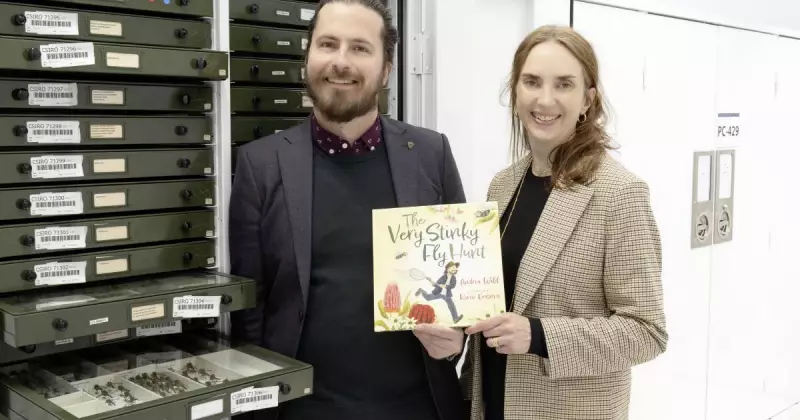
To share this fascination with a new generation, Dr Bayless has teamed up with CSIRO colleague Andrea Wild to write a children's book, The Very Stinky Fly Hunt. "It's a great way to share science with kids, and show that discovery can happen anywhere, even in a toilet," he said.
So, when you see a scientist swatting through the bush on the slopes of Black Mountain with a net, know that it's Dr Keith Bayless. His passion for the world's most maligned insects is not just a personal quest; it's a mission that could yield significant benefits for Australian farmers and the national economy.