David Hockney, the British artist who has spent decades redefining how we see the world, leaves an indelible mark on art history. From his early days in London to his vibrant Los Angeles period, Hockney’s innovations span mediums, techniques, and perspectives. Here are 10 ways he changed art forever.
1. Embracing the iPad as a Canvas
Long before digital art became mainstream, Hockney adopted the iPad as a serious artistic tool. He created hundreds of works using the Brushes app, proving that a tablet could produce museum-quality pieces. His iPad drawings, often depicting sunrises or still lifes, challenged traditional notions of authenticity and medium.
2. Reinventing Perspective
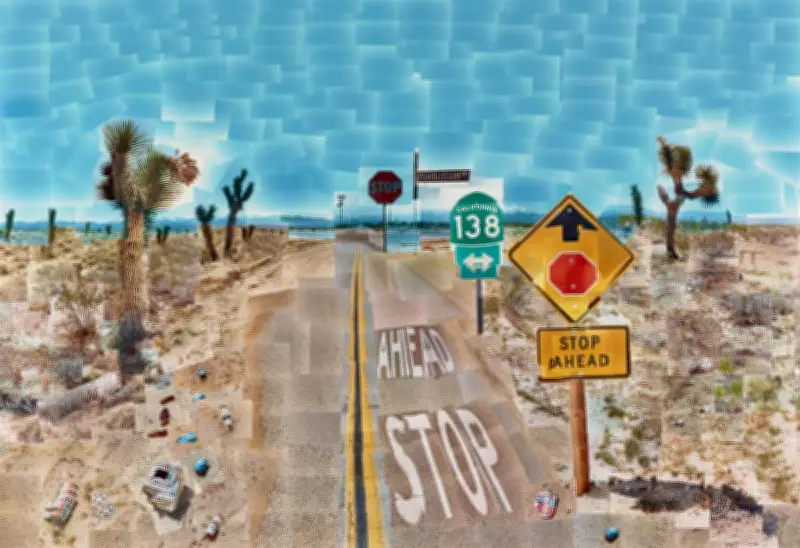
Hockney’s fascination with perspective led him to deconstruct and rebuild it. In works like Pearblossom Hwy., he used photomontage to create a cubist-like, multi-point perspective that mimics how the eye actually sees the world. This technique influenced a generation of photographers and painters.

3. The Los Angeles Aesthetic
Hockney’s move to Los Angeles in the 1960s transformed his palette and subject matter. His depictions of swimming pools, palm trees, and modernist architecture—bathed in bright California light—became iconic. Works like A Bigger Splash captured a sense of leisure and optimism that defined a cultural moment.
4. Pioneering Photo Collage
In the 1980s, Hockney created photo collages he called “joiners.” By assembling multiple Polaroid or 35mm prints of a single scene, he fractured time and space, creating a dynamic, composite view. This approach influenced contemporary photography and visual storytelling.
5. Challenging the Single-Point Perspective
Hockney argued that the single-point perspective used since the Renaissance is limiting. He experimented with reverse perspective and anamorphosis, encouraging viewers to move and engage with artworks actively. His theories reshaped art education and criticism.
6. Bringing Color to the Forefront
Hockney’s bold, often unnatural color choices—like pink trees or purple shadows—emphasized emotional and perceptual truth over realism. His use of color influenced interior design, fashion, and digital art, demonstrating that color could carry narrative weight.
7. Merging Landscape and Technology
Hockney merged traditional landscape painting with cutting-edge technology. He used video cameras, photocopiers, and eventually iPads to capture the changing seasons in Yorkshire. His series The Arrival of Spring showed how technology could enhance, not replace, observational painting.
8. Reviving the Sketchbook
Hockney elevated the sketchbook from a preparatory tool to a finished artwork. His sketchbooks, filled with intimate drawings and notes, were exhibited as complete pieces. This practice encouraged artists to value process and spontaneity.
9. Opera and Stage Design
Hockney’s set designs for opera—including productions of The Rake’s Progress and Turandot—brought his visual language to the stage. His bold, minimalist sets influenced stage design and blurred the line between fine art and performance.
10. Inspiring a New Generation
Hockney’s relentless curiosity and refusal to be confined by any single style or medium inspired countless artists. His openness to new tools, his joy in experimentation, and his dedication to seeing the world anew have left a lasting legacy that continues to resonate.
From iPads to perspective, David Hockney’s contributions are a testament to the power of artistic innovation. His work reminds us that art is not static—it evolves, adapts, and challenges us to look closer.