The Enduring Symbol of the Australian Landscape
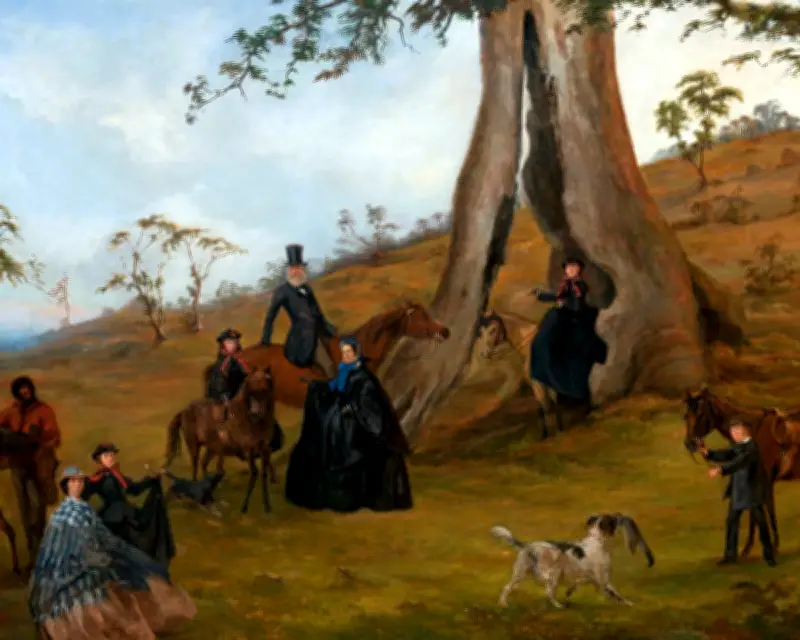
The gum tree, or eucalyptus, has been a constant presence in Australian art since the earliest colonial paintings. Its distinctive form and resilience have made it a powerful symbol of the Australian landscape, evolving from a mere backdrop to a central subject of artistic exploration.
Early European artists often depicted gum trees as exotic novelties, while later generations used them to express national identity and connection to the land. In the 20th century, artists like Margaret Preston and Sidney Nolan reimagined the gum tree through modernist and surrealist lenses, and contemporary artists now address environmental concerns through their depictions.
From Colonial Records to National Icons
The earliest known paintings of gum trees were created by convict artists and natural history illustrators. In the 1850s, gold rush artists like S.T. Gill included gum trees in their sketches of mining life. By the late 19th century, the Heidelberg School painters, including Tom Roberts and Arthur Streeton, celebrated the gum tree as part of the Australian light and color.

According to Dr. Jane Smith, an art historian at the University of Melbourne, “The gum tree became a shorthand for Australianness in art. It was a way for artists to distinguish their work from European traditions.”
Modernist Reinterpretations
In the 1920s and 1930s, Margaret Preston’s woodcuts and paintings simplified the gum tree into bold, decorative forms. Sidney Nolan’s iconic Ned Kelly series often featured gum trees as witnesses to the outlaw’s story. Albert Namatjira’s watercolors, while focused on the Central Australian landscape, also captured the majesty of ghost gums.
These artists moved beyond mere representation, using the gum tree to explore abstraction, narrative, and cultural identity.
Contemporary Environmental Commentary
Today, artists like John Wolseley and Fiona Hall use gum trees to comment on climate change, bushfires, and biodiversity loss. Wolseley’s intricate drawings combine scientific observation with artistic expression, while Hall’s installations often incorporate eucalyptus leaves as symbols of fragility.
The 2019-2020 bushfires inspired a new wave of gum tree art, with works that mourn the loss of ancient forests and advocate for conservation. As artist Mandy Martin noted, “The gum tree is both a survivor and a victim. It embodies the beauty and vulnerability of our continent.”
Gum Trees in Indigenous Art
Aboriginal artists have long depicted gum trees in their work, often imbued with cultural and spiritual significance. In dot paintings from the Central Desert, eucalyptus leaves and blossoms appear as symbols of food sources or as markers of country. Contemporary Indigenous artists like Emily Kame Kngwarreye and Clifford Possum Tjapaltjarri incorporated gum trees into their vibrant canvases, connecting traditional knowledge with modern expression.
Exhibition Highlights
Recent exhibitions such as “Eucalyptus: The Tree of Life” at the National Gallery of Australia and “Gum: The Art of the Eucalypt” at the Art Gallery of New South Wales have traced this history. The exhibitions feature over 100 works from the 19th century to the present, demonstrating the gum tree’s enduring appeal.
According to exhibition curator Dr. Sarah Brown, “The gum tree is a mirror of our changing relationship with the environment. From resource to icon, it continues to inspire artists and audiences alike.”