Wuthering Heights Film Adaptation Struggles to Capture Gothic Essence
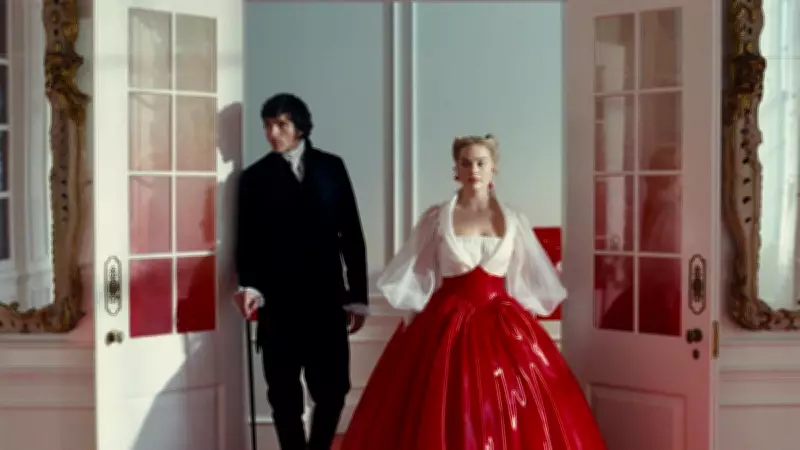
The highly anticipated cinematic rendition of Emily Bronte's classic novel Wuthering Heights, directed by Emerald Fennell and featuring Australian stars Margot Robbie and Jacob Elordi, has arrived in theatres with considerable fanfare. Despite the glossy production and bold creative choices, the film ultimately lands as a disappointingly average interpretation that fails to fully honour the source material's dark, complex spirit.
Star Performances Shine But Cannot Elevate Flawed Narrative
Margot Robbie brings her considerable talent to the role of Catherine Earnshaw, yet her portrayal struggles to transcend her established screen persona. Much like her iconic turns as Barbie or Harley Quinn, Robbie's Catherine never fully disappears into the character, hampered by a script that simplifies Bronte's intricate creation. In contrast, fellow Australian actor Jacob Elordi delivers a physically imposing and transformative performance as Heathcliff, channelling the raw intensity he demonstrated in his Oscar-nominated role in Guillermo del Toro's Frankenstein.
Elordi's casting does raise questions about authenticity, given that Bronte originally described Heathcliff as a dark-skinned gypsy figure. However, the actor's commitment to the role cannot be faulted, even as the screenplay diminishes Heathcliff from literature's notorious villain to a more conventional, misunderstood romantic lead.

Radical Adaptation Choices Simplify Bronte's Complex Vision
Emerald Fennell, who both directed and wrote the screenplay, has taken significant liberties with Bronte's 1847 masterpiece. The film eliminates the novel's second-generation characters entirely, collapsing the sprawling multi-generational saga into a more conventional love story framework. This decision, while perhaps necessary for cinematic pacing, strips away much of what made the original work so groundbreaking in its narrative structure and character complexity.
Characters who do appear often bear little resemblance to their literary counterparts. Catherine's brother Hindley has been merged with her father, a creative choice that works largely due to Martin Clunes' scene-stealing performance in the composite role. While previous adaptations have made similar compromises when tackling Bronte's challenging text, Fennell's version goes further in smoothing the story's rough edges, ultimately diminishing its emotional impact.
Explicit Content Replaces Subtlety in Character Relationships
The film makes a deliberate departure from the source material in its depiction of physical intimacy between Catherine and Heathcliff. Where Bronte conveyed their connection through psychological intensity and elemental passion, Fennell opts for explicit, torrid sex scenes that feel more sensational than substantive. One particularly jarring moment features a sexually frustrated Catherine engaging with a fish encased in jelly, a heavy-handed metaphor that exemplifies the film's tendency toward obvious symbolism.
These choices reflect Fennell's established directorial style, which previously produced memorable, provocative moments in films like Promising Young Woman and Saltburn. Unfortunately, in Wuthering Heights, such moments feel forced rather than organic, as if the director is striving to recreate past successes rather than serving this particular story.
Structural and Musical Elements Further Undermine the Film
Beyond narrative concerns, the film suffers from pacing issues, particularly in its final act. Elordi effectively conveys Heathcliff's anguish, but the rushed conclusion arrives with a whimper rather than the devastating emotional impact that should accompany this tragic love story. The relationship's slow-burn development throughout the film makes the abrupt ending feel particularly unsatisfying.
The soundtrack, featuring contributions from Charli XCX and legendary musician John Cale, includes some standout tracks like their collaboration House. However, the music often feels disconnected from the on-screen action, calling attention to itself rather than enhancing the atmospheric quality of the scenes. This creates a jarring experience where viewers find themselves noticing the soundtrack rather than being immersed in the film's world.

A Missed Opportunity for Provocative Storytelling
The fundamental disappointment of this Wuthering Heights adaptation lies in its failure to provoke the strong emotional response that both Bronte's novel and Fennell's previous work have achieved. By smoothing the story's complexities and making its protagonists more conventionally likable, the film robs them of genuine stakes and moral ambiguity. What should feel like an all-consuming, destructive passion instead registers as a somewhat generic period romance with explicit content.
For all its visual polish and committed performances, particularly from Jacob Elordi, the film never reaches the heights of emotional intensity or narrative innovation that might justify its radical reinterpretation. It stands as a competent but ultimately middling addition to the long history of Wuthering Heights adaptations, earning a respectable but unremarkable three-star rating that reflects its failure to fully capture the dark, gothic soul of Bronte's enduring masterpiece.