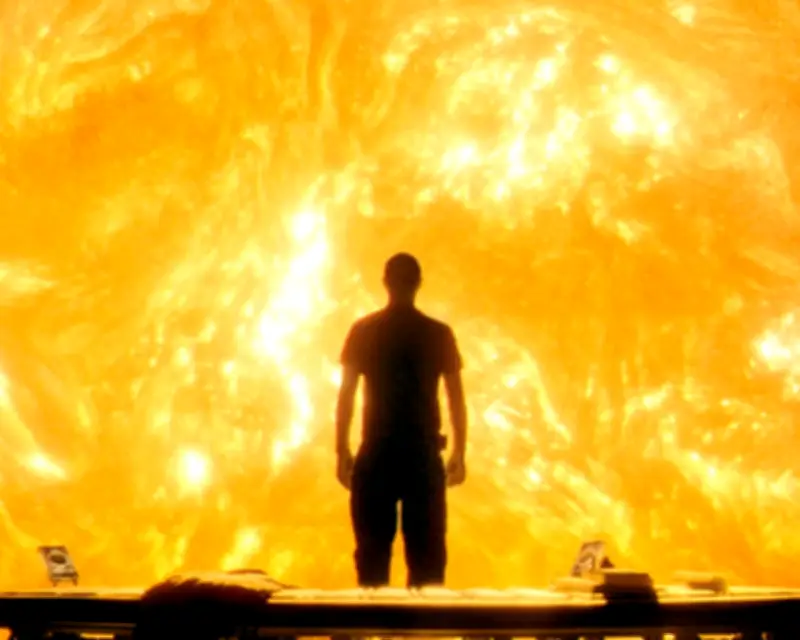
Twenty years after its release, Danny Boyle's 'Sunshine' continues to captivate audiences with its unique blend of philosophical depth and visceral tension. The 2007 film, written by Alex Garland, follows a crew of astronauts on a desperate mission to reignite the dying sun using a massive nuclear bomb. Starring Cillian Murphy, Chris Evans, and Michelle Yeoh, the movie explores themes of sacrifice, hubris, and the human condition against the backdrop of outer space.
The Plot and Premise
Set in 2057, the sun is fading, threatening to plunge Earth into an ice age. The spacecraft Icarus II carries a stellar bomb to restart the sun. However, the mission is jeopardized when the crew discovers a distress signal from the lost Icarus I, leading to a series of catastrophic events. The film's narrative is driven by the crew's psychological and moral dilemmas, as they confront the enormity of their task and the fragility of human life.
Visuals and Soundtrack
Boyle's direction is marked by stunning visual effects, with the sun depicted as both a beautiful and terrifying entity. The film's aesthetic, characterized by bright, blinding light and stark contrasts, creates a sense of awe and dread. The soundtrack, composed by John Murphy and Underworld, includes the iconic track 'Adagio in D Minor,' which has been widely used in other media. The music amplifies the film's emotional weight, underscoring moments of triumph and tragedy.

Themes and Reception
'Sunshine' delves into existential questions about humanity's place in the universe and the ethics of playing god. The film received positive reviews from critics, with a 76% approval rating on Rotten Tomatoes. Roger Ebert praised it as 'a thinking person's science fiction film.' However, the third act's shift into horror territory divided some audiences. Despite this, the film has gained a cult following over the years, with many considering it one of Boyle's best works.
Legacy
Two decades later, 'Sunshine' remains a touchstone for sci-fi enthusiasts. Its influence can be seen in later films like 'Interstellar' and 'The Martian,' which similarly blend scientific realism with human drama. The film's exploration of solar physics and space travel, while not entirely accurate, is grounded enough to feel plausible. As climate change and environmental concerns grow, the film's premise of a dying sun resonates even more strongly today.