In a cinematic love letter to one of film history's most revolutionary movements, American director Richard Linklater has crafted a captivating homage with his new feature, Nouvelle Vague. The film, which premiered on January 10 2026, meticulously recreates the chaotic, rule-breaking energy surrounding the creation of Jean-Luc Godard's landmark 1959 debut, A Bout de Souffle (Breathless).
The Unruly Genius Behind a Cinematic Revolution
Linklater, celebrated for works like the Before trilogy and Boyhood, channels his signature generosity and attention to detail into exploring how Godard's film came to be. Nouvelle Vague posits that while other striking films like François Truffaut's The 400 Blows and Alain Resnais' Hiroshima Mon Amour also emerged in 1959, it was Godard's Breathless that truly seized the world's attention and became synonymous with the French New Wave.
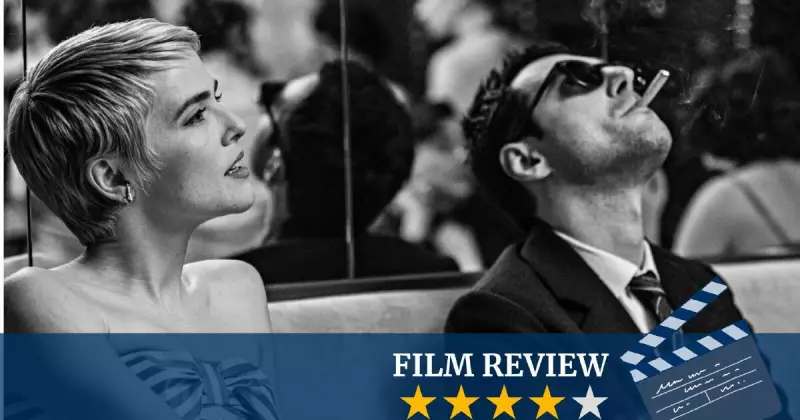
The film's power, then and now, lay in its insolent refusal to follow established rules and its charismatic stars, Jean-Paul Belmondo and Jean Seberg. Linklater's portrayal, featuring a spot-on Guillaume Marbeck as the elusive Godard, reveals the director's chaotic methods. With no finished script and lines often fed to actors from behind the camera, Godard revelled in improvisation, famously cutting within scenes to meet a producer's 90-minute demand and thus popularising the disruptive jump cut.

Chaos on Set: Capturing Cinematic Lightning in a Bottle
Nouvelle Vague brilliantly depicts the tension and innovation on set. While Belmondo (played by Aubry Dullin) appears relaxed by the process, Jean Seberg (a compelling Zoey Deutch) is visibly alarmed by a director who prefers few takes, minimal makeup, and shares little of his vision. "Are you making it up as you go along?" she asks. The answer, of course, was a resounding yes.
Godard threw out the Hollywood rulebook, dismissing concerns about continuity and synch-sound. He shot with a silent camera, leaving actors to dub their lines later, embracing a raw, immediate aesthetic that would define the movement. The film shows that even influential figures like assistant director Pierre Rissient, later a Cannes festival guru, had little sway over Godard's radical techniques.
A Dense and Beautifully Constructed Tribute
With a terrific, dense screenplay from a writing team including Holly Gent, Vincent Palmo, Michele Petin, and Laetitia Masson, Nouvelle Vague is a beautifully constructed piece. While it occasionally struggles to contain its many significant characters in bit parts, the film succeeds as both a compelling drama and a fascinating historical excavation.
It revisits the spirit of an era where a film critic from Cahiers du Cinéma could prove his theory that the best review was to make a film oneself. Linklater's work, crafted with a largely French crew, is a pure cinema pleasure for anyone who cherishes the indelible images of Belmondo and Seberg in a Paris attic or strolling the Champs-Élysées. It's a potent reminder of why the very idea of a 1983 Hollywood remake with Richard Gere felt like an outrage to the original's rebellious soul.