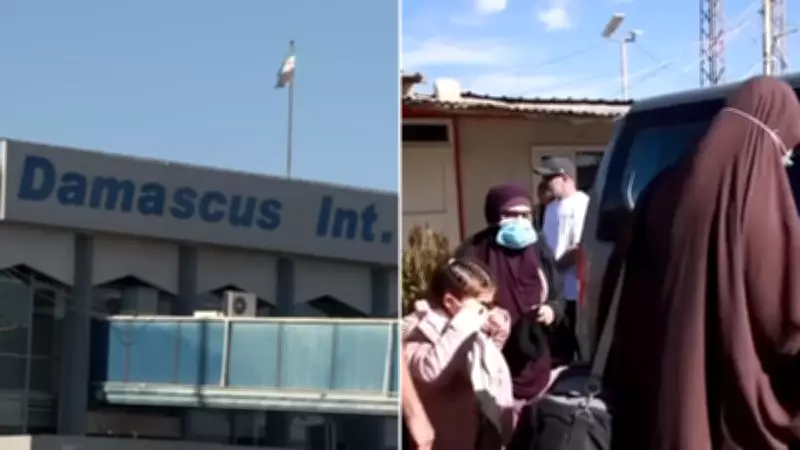
Australian taxpayers could spend millions of dollars monitoring returning ISIS brides and their children, with authorities preparing for years of intensive surveillance and community management operations.
ISIS brides return to Australia
Several Australian women who travelled to Syria to join ISIS are expected to return home within hours, triggering a massive police and security operation. Home Affairs Minister Tony Burke has insisted the federal government is not actively repatriating the women, saying they “made an appalling, disgraceful decision”. Some women are expected to be arrested as soon as they arrive, while others will enter the community under strict monitoring orders.
Counterterror resources to be tied up for years
Former NSW Police superintendent Rob Critchlow said the scale of monitoring required would place major pressure on already stretched law enforcement units. “There are massive powers available to law enforcement, state and federally, to control people’s behaviour ... which prevents them doing violent or dangerous things, but also who they can associate with, what material they can access,” he said on Sunrise. Critchlow said the cost of maintaining those restrictions was “huge”, requiring significant legal oversight, technical surveillance and around-the-clock operational support.

“There’s a combination of legal involvement but then operational support from surveillance operatives, technical and electronic surveillance, which are all very resource-intensive,” he said. “They’re all systems that we use for major crime investigations, which will now be diverted onto some of these people to watch what they’re up to.”
Critchlow warned specialist police teams currently focused on major crimes would be redirected into long-term monitoring operations. “You’ll be looking at surveillance teams working around the clock, specialist teams which are already busy on major crimes as it is, and they’ll be diverted to some of these jobs,” he said. “It’s very, very expensive to maintain and to run for extended periods, and this will be an extended engagement.”
He estimated the baseline long-term taxpayer cost at about $2 million for each returning person, warning the figure could climb significantly over time. “It’s enormously expensive,” he said. “This is not going away. These people are living in our community for, I assume, the rest of their days. So, this could be such a long-term investment.”
Critchlow said the public cost stretched well beyond surveillance teams, with airport operations, investigations and community management all requiring significant manpower. “You look at the amount the AFP has expended on these people to investigate them, the amount of resources being deployed in public spaces today around the airport, looking at community engagement ... It’s a whole suite of measures involved to look after the community,” he said.
Years of support ahead for returning children
Critchlow warned the costs associated with the women’s return would extend far beyond airport operations and surveillance teams, particularly when it came to supporting children raised in ISIS-controlled camps. The children are expected to take part in reintegration and support programs after arriving back in Australia.
“The children are the unfortunate meat in this sandwich,” former AFP detective superintendent David Craig told Sunrise. “Some of these children were born under Sharia law, (they) do not know what it means to be in a free democratic society,” he said. “Some of them have been in these camps for six or seven years, so they have been indoctrinated with this Islamic hardline view which is totally averse to our way of life.”
Craig said while children were generally considered more responsive to deradicalisation efforts than adults, there were still no guarantees the programs would succeed long-term. “Results show that children are more responsive to deradicalisation,” he said. “They will need significant support in reintegration and adjusting to the Australian way of life.”