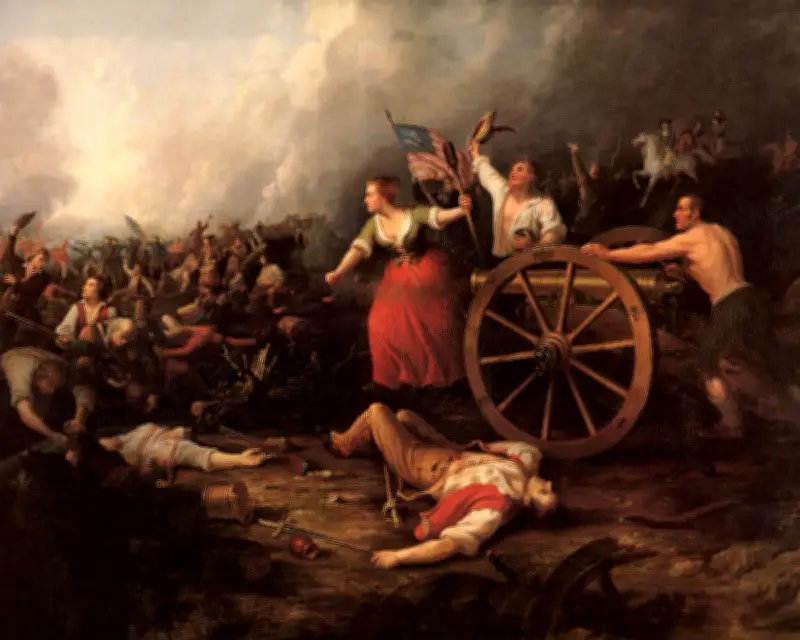
A groundbreaking new book, Obstinate Daughters, is reshaping the understanding of the American Revolution by placing women at the center of the struggle. The book, written by historian Dr. Sarah K. Miller, argues that women were not merely passive observers or supporters on the home front but were active participants who shaped the course of the war and the founding of the nation.
Women as Political Actors
Miller's research reveals that women engaged in a wide range of revolutionary activities, from boycotting British goods and organizing fundraising campaigns to spying for the Continental Army and even taking up arms. The book documents over 200 instances of women directly influencing military and political outcomes, a number that challenges the traditional focus on male figures like George Washington and Thomas Jefferson.
According to Miller, women like Mercy Otis Warren, who wrote political plays and pamphlets, and Deborah Sampson, who disguised herself as a man to fight in the war, are just the tip of the iceberg. The book includes stories of enslaved women who escaped to British lines seeking freedom, and Indigenous women who navigated alliances between colonial and British forces.

Challenging Historical Narratives
The title Obstinate Daughters is drawn from a phrase used by John Adams, who complained about women's persistent demands for a voice in the new republic. Miller uses this to frame the book's central argument: that women's contributions were often minimized or erased by contemporary male leaders and later historians.
“The American Revolution is a story we think we know, but we’ve been telling only half of it,” Miller said in an interview. “Women were not just knitting socks and waiting for their husbands to come home. They were making decisions, taking risks, and demanding a seat at the table. Their obstinacy was a driving force of the revolution.”
Impact on Modern Scholarship
The book has already sparked debate among historians. Dr. James L. Anderson, a professor of early American history at Yale University, called it “a necessary corrective” that “forces us to reconsider the very definition of political participation in the revolutionary era.” He noted that the book’s use of diaries, letters, and court records provides a rich, bottom-up view of the revolution.
Critics, however, caution against overstating women’s influence. Some argue that while women were active, their impact on key decisions and outcomes was limited by the patriarchal structures of the time. Miller acknowledges these constraints but insists that “the revolution could not have succeeded without women’s labor, intelligence, and courage.”
Broader Cultural Reckoning
The publication of Obstinate Daughters comes amid a broader cultural reckoning with the role of women in history. Museums and historical societies are increasingly incorporating women’s stories into their exhibits, and the book is expected to be widely adopted in college courses.
Miller’s work also highlights the diversity of women’s experiences. The book devotes significant attention to the roles of Black and Native American women, who often had to navigate multiple layers of oppression. For example, it recounts the story of Phillis Wheatley, an enslaved poet who wrote about revolutionary ideals, and the experiences of Mohawk women who leveraged their diplomatic roles amid the conflict.
As the nation approaches the 250th anniversary of the Declaration of Independence, Obstinate Daughters offers a timely reminder that the fight for freedom was not limited to the battlefield or the halls of Congress. It was a struggle that took place in homes, taverns, and marketplaces, and women were at its heart.