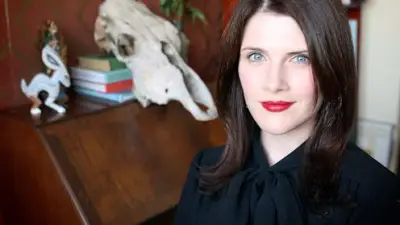
Italian physicist and bestselling author Carlo Rovelli has issued a stark warning about the growing threat of nuclear annihilation in his latest book, 'Armageddon: The Nuclear Apocalypse and How to Avoid It'. Published this week, the book argues that the risk of nuclear war is now greater than at any point since the height of the Cold War, driven by geopolitical tensions, technological advances, and a breakdown in arms control agreements.
Rovelli's Central Argument
Rovelli, known for his accessible writing on quantum gravity and time, shifts his focus to existential threats. He contends that the current global landscape—marked by the war in Ukraine, rising tensions between the US and China, and the modernization of nuclear arsenals—has created a 'perfect storm' for catastrophe. 'We have entered a new era of nuclear danger, where even a small miscalculation could lead to unimaginable destruction,' Rovelli writes. The book draws on historical examples, such as the Cuban Missile Crisis, to illustrate how close humanity has come to the brink.
Key Statistics and Quotes
According to Rovelli, the world's nine nuclear-armed states possess over 12,500 warheads, with approximately 2,000 kept on high alert. He notes that the Bulletin of the Atomic Scientists' Doomsday Clock is set at 90 seconds to midnight, the closest it has ever been. 'The probability of a nuclear event in the next decade is not negligible,' Rovelli states, citing models that estimate a 1-in-10 chance of a nuclear war within that timeframe. He emphasizes that even a 'limited' nuclear exchange would cause global famine and climate disruption, killing billions.

Proposed Solutions
Rovelli does not just highlight the problem; he offers solutions. He calls for a renewed commitment to disarmament, including the revival of treaties like the Intermediate-Range Nuclear Forces Treaty and the New START agreement. He also advocates for de-alerting warheads to reduce the risk of accidental launch, and for public education campaigns to build grassroots pressure. 'We need a global movement, similar to the one that ended the Cold War arms race,' he writes. 'Scientists, citizens, and leaders must work together to ensure that reason prevails over fear.'
Reception and Impact
The book has already sparked debate among policymakers and academics. Dr. Emma Belcher, president of the Ploughshares Fund, praised Rovelli's ability to make complex issues accessible: 'He translates the technicalities of nuclear strategy into a compelling moral argument. This book could be a game-changer.' However, some critics argue that Rovelli underestimates the political obstacles. 'His solutions are admirable but naive,' said Professor John Mearsheimer of the University of Chicago. 'Nuclear weapons are deeply embedded in national security doctrines.'
Broader Context
Rovelli's warning comes amid a surge in nuclear rhetoric. Russian President Vladimir Putin has repeatedly threatened nuclear escalation in Ukraine, while North Korea continues to test missiles. The US is modernizing its triad of bombers, submarines, and land-based missiles, a program estimated to cost $1.5 trillion over 30 years. Rovelli argues that such investments perpetuate the cycle of threat and counter-threat. 'Every dollar spent on new warheads is a dollar not spent on climate change, pandemic preparedness, or poverty alleviation,' he says.
Conclusion
'Armageddon' is a clarion call for humanity to wake up to the existential peril it faces. Rovelli ends with a note of cautious optimism: 'We have the intelligence to solve this problem. The question is whether we have the will.' The book is published by Penguin Random House and is available in bookstores from July 1.