Forget the idea that a caravan park holiday is a second-rate choice. According to writer and strategist Lanna Hill, these humble destinations are far from a downgrade. Instead, they represent a powerful form of time travel and one of the last bastions of genuine, unscripted community in Australian life.
The Unplanned Village: Community Without Algorithms
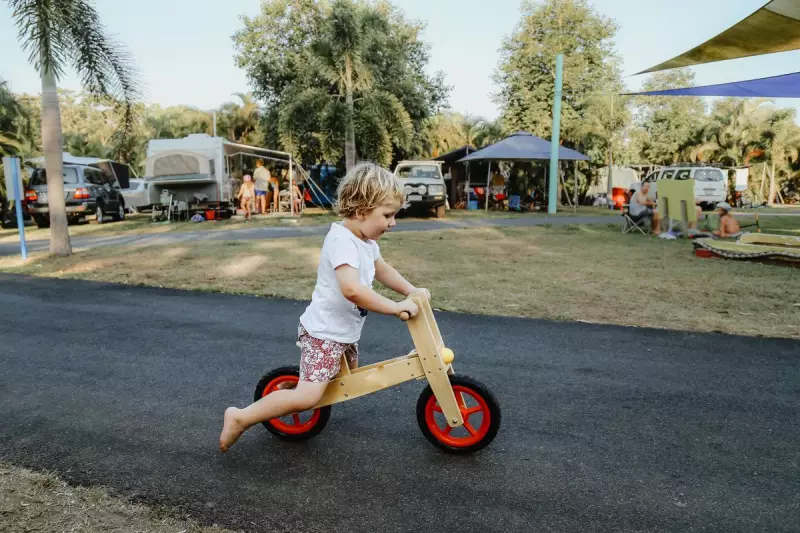
Every January, a familiar scene unfolds across coastal and regional Australia. As noted by Lanna Hill, caravan parks transform into spontaneous villages where social rules are refreshingly simple. Strangers become instant neighbours, helping to reverse a trailer into a tight spot as if by instinct. Children form roaming packs, exploring with a freedom rarely seen in managed modern childhoods.
This stands in stark contrast to much of contemporary living, which is often transactional and performance-driven. Even our sense of community is frequently mediated by memberships, group chats, or social media algorithms. The caravan park offers the opposite: a messy, democratic, and low-stakes environment where people can simply exist without having to explain themselves.

Chasing a Feeling: Nostalgia as a Signal for Simpler Times
For many Australians in their thirties, forties, and fifties, camping trips are more than a break. They are a direct line to the texture of summers past. This is a time travel experience back to an era before every moment was booked online—a time of being outside, inventive boredom, and being trusted to roam.
Modern parenting, Hill observes, operates in a climate of more fear, comparison, and logistics. Screens often fill the gaps. By dragging a tent, van, or camper trailer up the coast, parents are chasing both a holiday and a physical memory: long days, simple food, salty hair, and time that doesn't feel like an assessment. This nostalgia is not childish; it's a signal for less complexity and more freedom to be ordinary.
A Multi-Billion Dollar Breath of Fresh Air for Regional Australia
This yearning for simplicity is not a niche trend. It's a massive economic force. According to Tourism Research Australia data for the year ending December 2024, Australians took a staggering 15.2 million caravan and camping overnight trips, spending a total of $14 billion.
The data reveals a crucial detail for regional economies: travellers clocked 57.1 million nights away, with a massive 90 per cent of those nights spent in regional Australia. This translated into $9.2 billion spent directly in regional destinations. Commercial caravan parks and camping grounds accounted for 56 per cent of the trips and 62 per cent of the nights.
This is where the country goes to breathe, and where regional towns reap significant economic benefits. The best parks understand they are selling more than a site. They are selling permission: for kids to be loud, sandy, and feral in the best way; for adults to be unpolished; for conversations to flow uninterrupted by an inbox.
The Uplifting Conclusion: Choosing Less to Gain More
The enduring appeal of the caravan park offers an uplifting counter-narrative. When life gets noisier and more complex, Australians don't always reach for more luxury or more curated experiences. Often, they reach for less: fewer choices, fewer social costumes, fewer layers between themselves and the raw experience of the day.
They choose a place that enforces a slower pace and requires a bit of old-fashioned cooperation. In doing so, they remember how to share space and build community without a digital intermediary. The caravan park holiday is not lesser. It's a vital reminder that community doesn't need an algorithm, and that time doesn't always need to be scheduled and optimised. Sometimes, it's just a plastic table, a sunburnt afternoon, and a bunch of strangers who start to feel like neighbours.
Lanna Hill is a strategist, speaker, board director and founder of Leverage Media and Rally Group.