Tasmania doesn’t ease you in. It arrives all at once, vivid and immediate, with mountain air, bright light and landscapes that feel sharper than you expect for a place so often described in soft focus. The skies are moodier, the rivers look inkier. Every second person is wearing a fisherman beanie and carrying either a sourdough loaf or emotional depth. Even the eucalyptus trees seem to lean into the drama of it all.
I saw Tasmania for the first time during the Off Season, hosted by Tourism Tasmania, and I’m now convinced this is how the island should be experienced. Not in peak summer, elbow-to-elbow with caravan traffic and families applying SPF50 in beach car parks. But in winter, when the mist rolls low over the mountains and everybody hands you a glass of pinot noir the second you walk through a door.
For six days, we zig-zagged across the state in a moving cocoon of thermals, luggage, snack wrappers and increasingly unhinged conversations, led by our endlessly patient guide, Junaidi, who somehow managed to shepherd a group of journalists across nearly 10 hours of Tasmanian roads without once showing visible signs of psychological deterioration. You haven’t truly bonded with people until you’ve collectively hunted for phone chargers and snacks in a moving van somewhere between Queenstown and Strahan while running on little sleep and too much cheese.

Tasmania likes to market itself as rugged wilderness, but what struck me most was the softness of it all. The hospitality, the stillness, the strange intimacy that comes from being on an island where everybody seems deeply connected to the land they’re standing on.
Day 1: Launceston Arrival
Day 1 began in Launceston at the wonderfully cinematic Peppers Silo Hotel, where the Tamar River sat outside looking appropriately colourful and dramatic, as though it had been art-directed specifically for interstate media. The first dinner at Stillwater established the tone for the week immediately: exceptional food, excellent wine and the growing realisation that my jeans were about to become increasingly ambitious. There are few things more intimate than a first-night media trip dinner. Everybody is still pretending to be normal. Nobody knows who snores yet. The group dynamic is fragile and forming. One person orders sparkling water to signal discipline before inevitably spiralling into pinot by dessert. I had crispy skin pork with plum and yuzu, lamb rump with mint salsa verde, and a coconut panna cotta situation involving lychee and pineapple that I’m still thinking about with emotional sincerity.
Day 2: West Coast Wilderness Railway
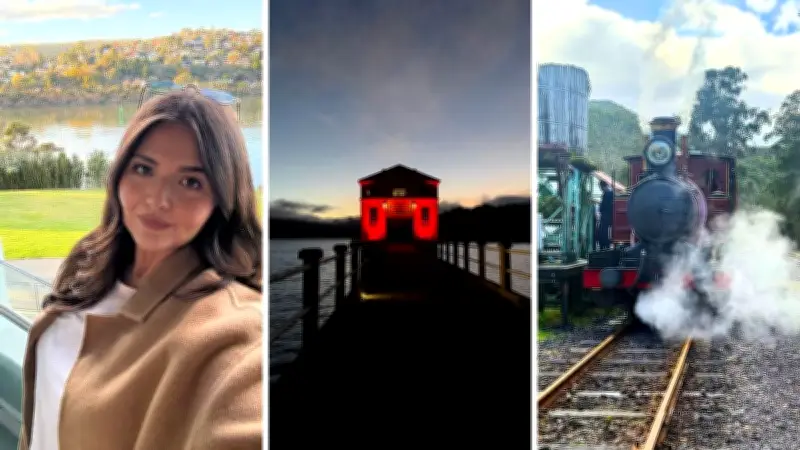
The next morning we set off early. By 7am we were in the car heading towards the West Coast Wilderness Railway, which sounds quaint until you realise it involves 4.5 hours on Tasmanian roads where every bend introduces either a breathtaking view or mild existential reflection. We stopped briefly in Penguin, a town that has committed to its branding with admirable confidence. Giant penguins, penguin bins, penguin signage. A giant penguin statue standing proudly near Bass Strait like some kind of regional mascot for perseverance. Then came the steam train. The moment I saw the West Coast Wilderness Railway emerging through the mist, hissing dramatically against the rainforest backdrop, I lost all emotional composure. It looked less like public transport and more like something that should be carrying orphans to wizard school. The journey through Queenstown and Rinadeena felt almost surreal. Dense rainforest pressed against the windows while staff handed out food and wine with alarming consistency. At Lynchford Station we ate katsu sandos created for Dark Mofo and truffle toasties from The Agrarian Kitchen, which somehow managed to ruin all future toasties for me permanently. By the time we arrived at Risby Cove in Strahan, everybody had reached that specific stage of travel where you are simultaneously overstimulated and deeply sleepy. I stayed in the Storyteller’s Suite, a former cinema turned accommodation complete with popcorn and Tasmanian Valhalla ice creams. It felt like the kind of room Wes Anderson would design after a breakup. I skipped post-canape socialising in favour of a bath and a movie, which felt like an act of profound personal growth.

Day 3: Gordon River Cruise and Pumphouse Point
The next morning delivered one of the most beautiful experiences of the trip: the Gordon River Cruises. There’s something almost eerie about travelling through the Gordon River in near silence. The boat switches to electric motors and suddenly the wilderness becomes louder than you are. Water laps softly against the hull. The rainforest seems impossibly ancient. Everybody onboard instinctively starts whispering like they’ve entered a cathedral. At Heritage Landing, we wandered through rainforest thick with Huon pine and myrtle while learning about the ecosystem from guides who spoke with the kind of passion that can’t be faked for tourism copy. Then came Sarah Island, where convict stories were delivered with enough grim detail to make everybody briefly reconsider their inbox complaints back home. Tasmania has a way of constantly reminding you that beauty and brutality often occupy the same landscape. Later that afternoon we arrived at Pumphouse Point, which may be one of the most atmospheric places I’ve ever stayed. An adults-only retreat sitting on a glacial lake surrounded by forest, it feels less like a hotel and more like the setting of a Scandi psychological thriller where everybody drinks natural wine and has secrets. There were whisky tastings, communal lounges and one of those dinners where the entire table slowly descends into oversharing by the second bottle.
Day 4: Derwent Estate and Arden Bathhouse
By Day 4, we had collectively entered what I call the “media trip delusion phase”, where your body no longer understands what time it is and every meal starts feeling emotionally significant. Lunch at Derwent Estate involved wine pairings, open fireplaces and views across the river so beautiful they looked AI-generated. Then came Arden Bathhouse, where we rotated between sauna, cold plunge and hot tub while pretending not to make eye contact in our swimmers. There is no faster route to accelerated intimacy than collectively experiencing hypothermia in a cold plunge pool. That evening we checked into MACq 01 Hotel, which quickly became one of my favourite stays of the trip. Dinner at Aloft involved wallaby, ox tongue and crispy chilli eggplant served with the kind of presentation that makes everybody pause before eating so they can take exactly the same photo from slightly different angles.
Day 5: Hobart and Cascades Female Factory
By Saturday morning, Hobart was showing off. The sun hit Salamanca Place perfectly as crowds moved through Salamanca Market carrying hot coffees and armfuls of local produce. There was something comforting about markets. Nobody seemed rushed (except me, the Sydney-sider, hello); everybody appeared to either make ceramics or know somebody who does. We followed this with a walking history tour through Hobart that traced the city from the Palawa peoples through British settlement and convict history, using retro viewfinders to compare old streetscapes against the present day. Tasmania wears its history differently to the mainland. Less polished, less sanitised. The stories feel closer to the surface. Nowhere was that more apparent than at Cascades Female Factory. It was one of the most moving parts of the trip. Quiet, confronting and impossible to rush through emotionally. That evening, however, we were back on a boat eating oysters and abalone aboard Tasmanian Wild Seafood Adventures while cruising beneath winter skies with hot gin cider in hand, which is the emotional whiplash Tasmania specialises in.
Day 6: MONA and Departure
The final day somehow arrived too quickly. At Farm Gate Market, farmers sold produce directly from stalls while locals lined up for pastries in puffer jackets. Tasmania’s whole identity seems built around shortening the distance between producer and consumer. Everybody knows where things come from here, from apples to butter, and oysters, oh the oysters. Lunch at The Agrarian Kitchen was another standout, set inside the former Willow Court asylum. Tasmania has a fascinating relationship with adaptive reuse. Former hospital mortuaries become cocktail bars. Old institutions become celebrated restaurants. History isn’t erased here. It’s repurposed. And finally, there was the Museum of Old and New Art, better known as MONA. People had spent years telling me I would love it, which usually guarantees disappointment. Instead, it exceeded every expectation. The museum feels like descending into somebody’s subconscious. Underground tunnels, confronting installations, ancient artefacts beside provocative contemporary works. Sex, death, absurdity and beauty all colliding underground beside the river. I raced through it in under an hour, which is frankly disrespectful to the museum and proof that I need to return. Eventually we gathered at Faro for drinks before experiencing James Turrell’s Ganzfeld installation, which made me feel like I’d briefly detached from reality. And then it was over. Suitcases packed, group photos exchanged, everybody promising future reunions that statistically may never occur once normal life resumes and unanswered emails reclaim dominance.
Tasmania in winter is not just beautiful; it’s immersive. The kind of place that slows your nervous system down against your will. I arrived expecting wilderness and exceptional food. I left thinking about stories, convicts, rainforests, tiny towns, cold rivers, conversations over wine. The strange intimacy of travelling through an isolated island with strangers who slowly stop feeling like strangers, and the incredible Tasmanians I feel privileged to have met along the way. Huge thanks to Tourism Tasmania for hosting a truly unforgettable trip. Next time, I’ll stay longer. And next time, somebody better take me to Dark Mofo.