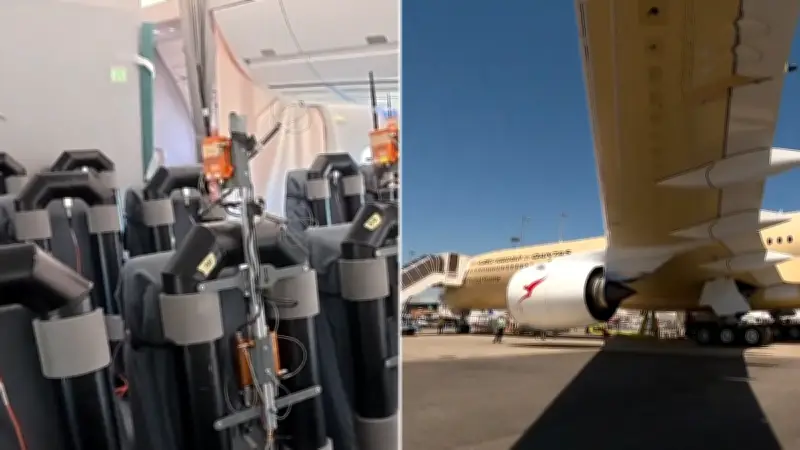
Scientists are collaborating with Qantas to develop innovative methods for helping travelers overcome jet lag on the airline's new non-stop flights to Europe, where passengers will spend up to 21 hours in the air. In a development hailed as a win for passengers, the airline is conducting extensive testing on its new Qantas A350 aircraft, specifically designed to fly non-stop from Sydney to London.
Testing with Dummies and Real Passengers
Inside the test plane in Toulouse, France, passengers are not typical travelers—they are dummies made from tubes covered in sensors, designed to simulate real passengers. "We have some dummies simulating passengers, so we can create heat and weight, of course, and we have microphones to measure the noise and the vibration," said Airbus test pilot Thomas Wilhelm.
But it is not just dummies being tested. Real passengers will also spend almost an entire day on board as scientists develop specialized light and meal routines aimed at reducing jet lag. "Appropriately timed light of the right intensity can help either promote alertness or enable people to get to sleep," explained Professor Peter Cistulli from the University of Sydney's Sleep Medicine department.

Pilot Rest and Flight Path Innovations
The aircraft also features a hidden compartment in front of first class where pilots can take their breaks during the marathon flight. "The best safety feature in any aeroplane is two well-trained, well-rested pilots in the flight deck at all times," said Captain Andrew Marshall from the Australian and International Pilots Association.
The non-stop Sydney to London route takes up to 21 hours, while the return flight is usually quicker thanks to westerly winds. A new flight path over the North Pole will make the most of those winds and airspace restrictions. "So we think this route will be used about 20 per cent of the time," said Qantas Chief Technical Pilot Alex Passerini.