Australia's brewing industry has issued a stark warning that more closures are likely after the shutdown of the historic James Boag brewery reignited concerns about the rising cost of making beer. Industry leaders say brewers are being squeezed by a combination of taxes and rising costs, with many independent operators struggling to absorb the pressure.
James Boag closure highlights industry challenges
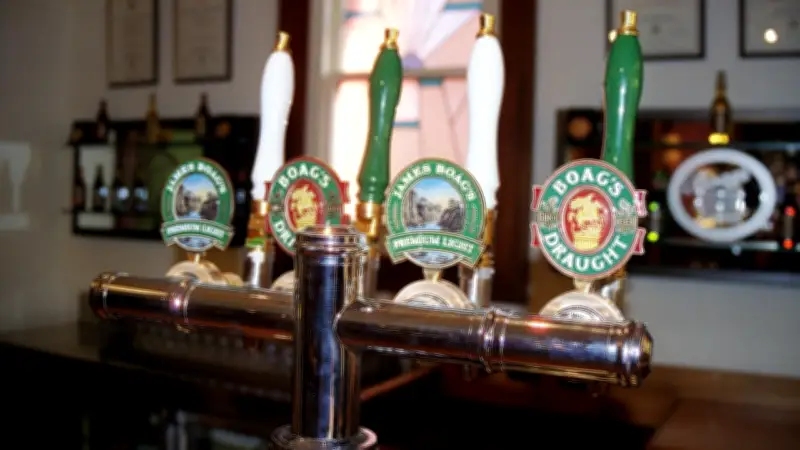
The warning follows Lion Australia's decision to end brewing operations at the 145-year-old James Boag facility in Launceston later this year and shift production elsewhere. While Lion will continue producing the Boag's brand, the closure has become a fresh example of the challenges facing beer makers across the country.
Independent Brewers Association chief executive Sabrina Kunz said the industry had already lost around 80 breweries in the past two years and more closures were expected. "We've seen around 80 breweries close over the past two years," Ms Kunz told SkyNews.com.au. "That has been substantial and we do expect independent breweries to continue to close in the following years."

Government-imposed costs add to pressure
She said government-imposed costs were adding to an already difficult operating environment. "The beer excise tax regime, coupled with the cost of container deposit schemes, and regulatory compliance are all significant costs imposed by government," she said. "Couple that with the fuel cost increases impacting all of the costs of goods that go into making beer – it's simply going to be unaffordable for Australian owned businesses to keep absorbing those costs."
The industry has long argued Australia places an unusually heavy tax burden on beer. Beer and spirits are taxed through an excise system that increases twice a year in line with inflation, while wine is taxed under a separate system based on wholesale value. Australia now has one of the highest beer tax rates in the world. Only Norway and Finland collect more tax on beer. The tax has increased every six months since 1988 and has almost doubled over the past two decades.
Brewers hit from both directions
Ms Kunz said brewers were now being hit from both directions. "All of the costs of making beer have risen and continue to rise," she said. "Australians want to be able to afford to shout a round at the pub – but their costs are going up as well. So, with disposable income stretched and the cost to make beer rising – it's going to mean that the average Australian can't afford an Australian-owned beer."
The pressure is particularly acute in regional Australia, where transport and logistics costs are often higher. "Like all other small businesses, regional areas bear the brunt of significant increases in logistics costs for all of their inputs," Ms Kunz said. "With over 56 per cent of independent breweries in regional and rural Australia, it is certainly something we are concerned about."
Call for alcohol tax reform
The industry body is now calling for broader alcohol tax reform, arguing the current system discourages growth and investment. "The federal government must undertake alcohol taxation reform," Ms Kunz said. "We only need to look at what has happened in tobacco and now in distilling – we've reached a point where the government can no longer claim the tax regime is about harm reduction."
She noted that 48 per cent of independent breweries struggle to retain profitability yet contribute roughly $3.53 billion annually to the nation's economy and employ over half of the total beer sector. She also argued that current policy settings were creating barriers for independent producers trying to expand. "There is no skirting around the fact that the current policy settings are hollowing out the independent sector – forcing businesses to stay very small and actively discouraging growth," she argued. "Is this really the future we want? Do we want 85 per cent of the beer to be foreign owned, and no opportunity for an independent business to grow?"