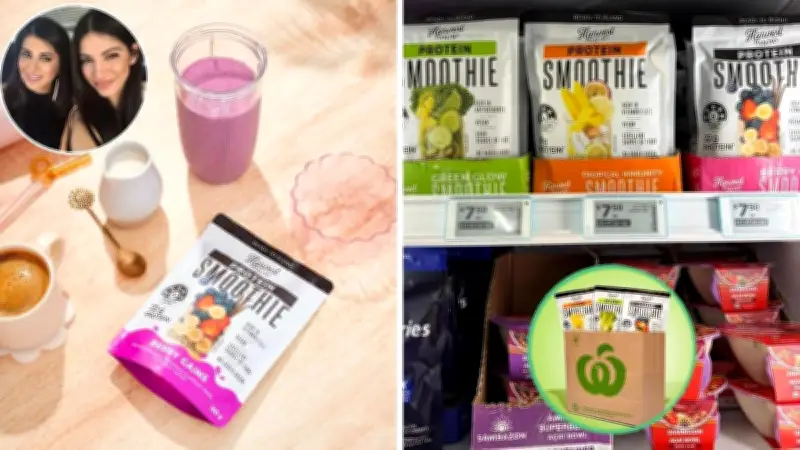
The Australian freezer aisle has long been dominated by fish fingers, family pies, and emergency garlic bread. Meanwhile, wellness has traditionally resided elsewhere, often in the form of expensive smoothies, complicated powders, or aspirational meal prep videos requiring military-level organisational skills.
Melbourne mums and longtime friends Esra Ozege and Mandy Makkar recognised this disconnect immediately. Between them, they are raising five boys, including a newborn, while juggling careers, family life, and the increasingly impossible task of eating well when time feels perpetually scarce. So instead of launching another glossy wellness brand built around impossible routines, they created something designed for real life.
Their startup, Harvest Pantry, has gone from concept to national rollout in 950 Woolworths stores in under six months, an unusually rapid ascent in Australia's fiercely competitive fast-moving consumer goods (FMCG) space.

A simple concept with a big shift
The brand's hero product is a range of frozen ready-to-blend protein smoothies designed to go from freezer to blender in under 30 seconds. No chopping, no measuring, no half-rotten spinach dying in the vegetable drawer. The concept sounds deceptively simple, but it taps into a much bigger transformation in how Australians shop.
Consumers increasingly demand convenience without compromising on ingredients, nutrition, or transparency. The era of "healthy" products filled with unrecognisable additives is starting to wane.
"We were sick of products claiming to be healthy but packed with ingredients we didn't recognise," says co-founder Mandy Makkar. "We wanted something genuinely convenient that still felt like real food."
Each smoothie comes pre-portioned with freezer-fresh fruit, vegetables, and plant protein, offering a cleaner-label alternative to many ready-to-drink protein products currently crowding supermarket shelves. The launch range includes Berry Gains, Tropical Immunity, and Green Glow, all made with recognisable wholefood ingredients and no added sweeteners or fillers.
Timing and global trends
The timing feels significant. Globally, frozen wellness products and ready-to-blend smoothies have exploded in popularity, particularly in the United States and parts of Europe, where freezer aisles now resemble curated wellness sections rather than a place to buy frozen peas.
"In overseas markets, frozen wellness products and ready-to-blend smoothies are booming," says Esra Ozege. "In Australia, the freezer aisle hasn't evolved the same way yet. We think there's a huge opportunity to change that."
Speed of modern startups
What makes Harvest Pantry's rise particularly interesting is how modern startups can now move at a speed that would have once been impossible. Traditional FMCG giants often spend years navigating development pipelines, approvals, and corporate layers. Smaller founder-led brands, meanwhile, can pivot in real time.
"As a startup, we can make decisions in an hour that might take a corporate twelve months," says Esra. "We identified a gap in the market, moved quickly, and backed ourselves."
Much of the business was reportedly built after bedtime, between school drop-offs and during late-night calls once their children were asleep. Not polished entrepreneurs with a slick corporate blueprint, but two women trying to solve a problem they personally experienced every day.
"We're not polished corporate founders," says Esra. "We're just two mums building something we genuinely wanted ourselves."
Authenticity as a growth strategy
That authenticity has also become part of the brand's growth strategy. Social media and founder storytelling helped Harvest Pantry build momentum before many shoppers had even spotted the products in freezers.
"It shows how quickly modern startups can move now," says Mandy. "You no longer need massive infrastructure or years of development to launch nationally. Small founders with strong products and a clear vision can genuinely disrupt categories."
Now stocked nationally in Woolworths freezer aisles, Harvest Pantry is betting Australians are finally ready to rethink what convenience food can look like.