Lab-Grown Diamonds Transform Australian Jewellery Market as Affordability Drives Demand
Lab-Grown Diamonds Boom in Australia

The Australian jewellery landscape is undergoing a radiant transformation, with lab-grown diamonds emerging as the sparkling choice for consumers nationwide. What began as a niche alternative has blossomed into a dominant market force, reshaping traditions and making luxury more accessible than ever before.

A Market Shift Sparked by Value

Recent data from the Global Diamond Trade Organisation reveals a remarkable trend: lab-grown diamonds currently command between 50 and 60 per cent of Australia's retail diamond market share. Industry projections suggest this figure could soar to as high as 70 per cent by the close of 2026, signalling a profound change in consumer preferences.

For Perth-based jeweller Julie Reany, owner of Hope Diamonds in Applecross, this evolution has been both surprising and inevitable. With eighteen years of experience in the diamond trade, Ms Reany admits her initial scepticism has given way to enthusiastic endorsement.

"When I first encountered lab-grown diamonds about six or seven years ago, I dismissed them as inferior imitations," she recalls. "But when quality improved dramatically three to four years ago, becoming visually indistinguishable from mined stones, client demand became impossible to ignore."

The Price Revolution

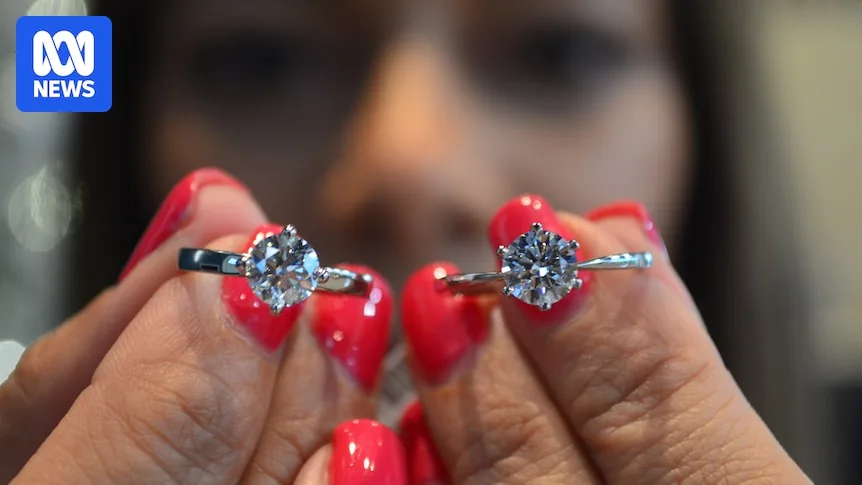
The most compelling factor driving this seismic shift is stark economic reality. The price differential between lab-grown and mined diamonds has created unprecedented opportunities for consumers.

"A one-carat mined diamond of good quality currently costs around $7,000 to $8,000," Ms Reany explains. "The lab-grown equivalent comes in under $500. For two carats, you might pay $750 for lab-grown versus $20,000 to $25,000 for mined."

This dramatic price reduction has fundamentally altered the engagement ring shopping experience. Young couples, in particular, are discovering newfound freedom in their choices.

"The relief on a young man's face tells the whole story," Ms Reany observes. "They want to make their partner happy without financial strain. Now they can achieve that while getting exactly what she desires."

Beyond Engagements: A Broader Appeal

While engagement rings remain a primary driver, lab-grown diamonds have expanded their appeal across demographics and occasions. Over the past eighteen months, Ms Reany has witnessed growing interest from older customers celebrating milestones.

"We're now selling lab-grown diamonds for anniversary presents, milestone birthdays, and classic jewellery pieces like tennis bracelets and necklaces," she notes. "These items were once rare purchases due to cost, but now we're moving significantly more volume."

Even diamond stud earrings have seen a transformation. "People no longer need to settle for smaller stones. They can afford bolder, more substantial pieces that truly reflect their style," Ms Reany adds.

Real Stories: Dreams Within Reach

The human impact of this trend is beautifully illustrated by Perth couple Jack and Sarah Leenaars, high school sweethearts who recently became engaged. Jack proposed at Lesmurdie Falls in Serpentine with a lab-grown diamond ring that perfectly matched Sarah's long-held vision.

"I've had a Pinterest board since I was fifteen," Sarah reveals. "Choosing lab-grown was a no-brainer. I told Jack to save the money – it looks exactly the same and allowed me to get my dream design without compromise."

Jack expresses similar satisfaction: "I was genuinely shocked by the relatively low price. I expected to pay far more for a ring of this quality."

Generational Drivers and Future Outlook

Leading Perth stylist Bridget Hudson identifies affordability as the primary catalyst for lab-grown diamonds' surging popularity. "Lab-grown stones allow buyers to acquire larger diamonds for considerably less money," she states.

Millennials and Generation Z are at the forefront of this movement, valuing both economic sensibility and ethical considerations. "These generations see lab-grown diamonds as equally beautiful while aligning with their values around sustainability and financial prudence," Ms Hudson explains.

In an era where cost-of-living pressures weigh heavily, this accessibility represents a genuine game-changer. "Young couples can now achieve the luxury aesthetic within their budgets," she notes.

Looking ahead, Ms Hudson predicts lab-grown diamonds will eventually become the default choice. "Natural diamonds will always have a market due to their rarity and status, but in twenty to thirty years, lab-grown will likely dominate, with mined stones repositioned as premium collectibles."

Celebrity Endorsement on Global Stages

The trend has gained impressive momentum on international red carpets, further validating lab-grown diamonds' place in high fashion. At recent Grammy Awards ceremonies:

  • Singer Tyla wore a custom collar featuring over 100 lab-grown diamonds totalling 11.6 carats
  • PinkPantheress adorned herself with lab-grown diamond jewellery including a 68-carat necklace
  • Other notable celebrities like Emma Watson, Miley Cyrus, Lady Gaga, and Millie Bobby Brown have also embraced lab-grown stones for major events

This celebrity adoption reinforces the message that lab-grown diamonds offer uncompromised brilliance and style.

As Australia's jewellery market continues to evolve, one thing remains clear: lab-grown diamonds are not merely a passing trend but a permanent fixture, democratising luxury and allowing more Australians than ever to sparkle without financial sacrifice.