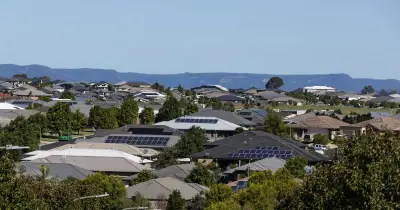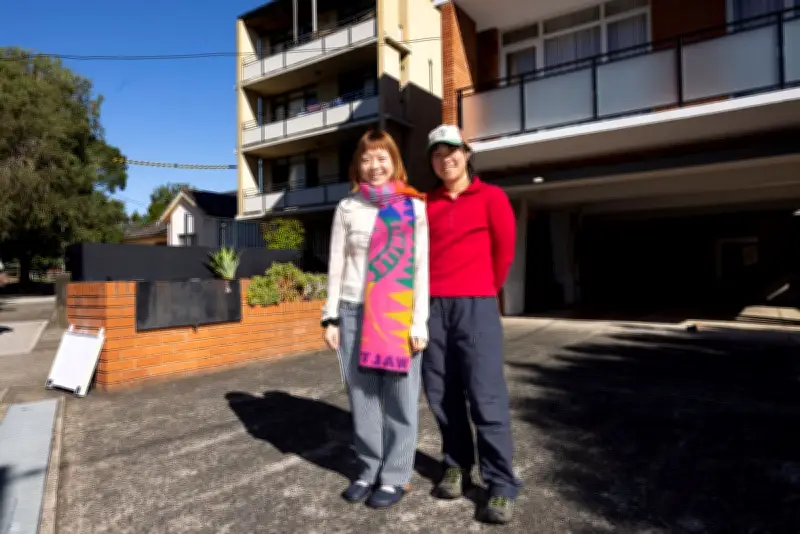
Lena and Linly just bought their first home at a $28,000 discount. Not one investor bid against them. The couple, who asked that their last names not be published, were successful at the first auction they bid at, after six weeks of looking at properties. The two-bedroom flat in Ashfield in Sydney's inner west passed in below the $950,000 reserve on Saturday, with the 31-year-olds negotiating a $922,000 final price.
“The times are in our favour,” Linly says. Real estate experts say the federal budget's tax reforms have discouraged investors and will push down prices. After three decades of rapid price growth, though, first time buyers do not expect the changes to negative gearing and capital gains tax concessions for property investors alone to solve Australia's housing problem. To make it into the market, Linly and Lena needed not just steady incomes but Linly's parents' help, the federal 5% deposit scheme and New South Wales' stamp duty discount. Nor have they ended up in the perfect place.
“The shower is completely broken, the windows hardly even open … and we're still paying almost a million dollars … it's wild,” Lena says. Linly adds: “Even with all the investors being scared off, we're still being squeezed. Negative gearing has squeezed us into a place that's pretty punishing. It should never have come in.”

The Albanese government is making a similar argument in its push to reform generous tax concessions for property investors, which it says have made it overly difficult for first home buyers to enter the market. The reforms appear to have sapped more momentum from the housing market after rising interest rates sparked a decline in the share of homes listed for auction that were being successfully sold each week.
Auction clearance rates falling
Most homes listed for auction in the last week of May did not sell as buyers stepped back, Cotality reported. The first week of June saw preliminary sales fall further. In Melbourne's inner north on Saturday, about a dozen people braved the winter drizzle to attend the auction of a two-bedroom cream brick unit in Brunswick East. Two young couples looking to buy their first home bid against each other. The higher bidders offered $720,000, below the vendor's reserve. Ray White agent Matthew Schroeder confirmed the couple had bought the unit after a lengthy negotiation with the owners, though he said he was not ready to disclose the price.
One of the locals who came to watch the auction, 37-year-old Vinda, bought a house with her partner in Northcote earlier this year with some financial assistance from their parents. Vinda says she has plenty of friends who are still looking to buy their first home and the majority will get some help from their parents. Asked what she thinks about Labor's tax reforms, she says: “I don't know if I have anything to say about that.”
The treasurer, Jim Chalmers, won't say Labor wants prices to fall but has been upbeat when asked about the falling clearance rates. “If we are making it easier for first home buyers to get a fair crack at auctions, then that's a good thing,” Chalmers said on Monday. Labor MPs, meanwhile, are campaigning on the cooldown. In an advertisement on social media, senator Michelle Ananda-Rajah reads out the happy headlines of renters becoming homeowners. “This is awesome,” Ananda-Rajah says. “Our changes … [are] cooling the property market and allowing first home buyers to compete. Once upon a time these headlines would have been completely alien in a country like Australia.”
Investor activity drops
Investors took out 57,000, or two in every five, new home loans in the first three months of 2026. Westpac predicts investor demand will fall by a third and available data indicates they are already going missing. Investors' mortgage applications at brokerage Loan Market dropped 23% over the month of May, week by week. First home buyers numbers fell as well – but just 12%.
In Melbourne's inner west, a three-bedroom house in Spotswood sold at auction for $1.72m on Saturday, to a couple from a neighbouring suburb looking to upsize. The agent, John Galea from Jas Stephens, said there had not been much investor interest over the past 12 months and those he had met already had large portfolios rather than being “mums and dads looking to buy their first investment”.

Local couple Robbie and Alex, both aged 33, came to watch the auction in Spotswood even though it was out of their price range. The pair could be considered “rent-vesters” – they rent in Newport and want to buy in the inner west but Robbie owns an investment property in Deanside in Melbourne's outer western suburbs. “I bought it years ago, it was my first home,” he says. “It's close to family but I've never had an emotional attachment to it.” Robbie would be able to negative gear his investment property as he says the income he gets from renting it out does not quite cover the entirety of his mortgage repayments.
In Sydney, Jeremy Walsh-Rossi is hopeful he won't be outbid by investors again after two years looking for a house for his young family. “It's always the mystery person on the phone,” Walsh-Rossi says. “Is [the auction] just another number to them or is it someone's family home?” On Saturday, Walsh-Rossi brought his children to a Marrickville townhouse, paint peeling off its walls and a window missing, ready to pay $1.6m. Two investors showed up to the auction but stayed silent. Walsh-Rossi bid up to his budget, then was outbid by another professional couple willing to pay $1.65m. “I need a bargain,” Walsh-Rossi says. “I don't want to over-extend myself and have to pay back a massive mortgage.”
House prices could fall, then rise
Lower investor activity is expected to cut prices, with Morgan Stanley forecasting the biggest national decline, of 5% to 10% in the short term. Sydney, Melbourne and Canberra home prices have already started going backwards. Even a 10% fall, though, would only take prices back to where they were in early 2025. Commonwealth Bank analysts Trent Saunders and Ashwin Clarke expect national prices to take a hit but be higher than they are now by 2028. Perth, Brisbane and Adelaide could avoid prices falling entirely, they wrote on Wednesday. “Growth is expected to return to broadly the same trajectory it would have followed without the policy changes,” they say.