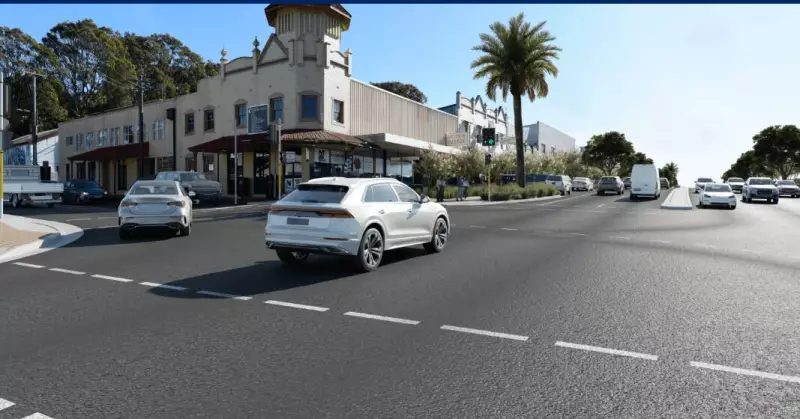
Work is now underway on a massive $420 million transformation of the Pacific Highway, targeting one of the Central Coast's most notorious and long-standing traffic bottlenecks at Wyong town centre.
Project Details and Scope
The 2.4-kilometre upgrade will see a dual carriageway built through the heart of Wyong, an area that has choked traffic and caused gridlock for decades. Wyong MP David Harris has labelled it the "biggest single road project ever undertaken on the Central Coast." The works will stretch from Johnson Road in Tuggerah to approximately 150 metres north of Cutler Drive in Wyong.
The complex project includes the construction of two new bridges, featuring four lanes over the Wyong River and three lanes over the railway line. To accommodate future growth, the design incorporates allowances for potential rail upgrades, with retaining walls and bridges built to specification. All necessary property acquisitions and adjustments for the project have been finalised.

Addressing Growth and Congestion
The upgrade is critically needed to support anticipated population growth from 345,596 in 2021 to an estimated 408,390 by 2041. Currently, on an average weekday, the Pacific Highway through Wyong carries up to 36,500 vehicles, including about 2,000 heavy vehicles. During peak hours, traffic can reach 1,500 vehicles per hour.
A 2025 report warned that without the upgrade, traffic congestion, delays, and safety issues would persist. It noted the highway's role in linking Wyong's town centre with northern residential communities and southern industrial and retail precincts. The report also highlighted a history of crashes at uncontrolled intersections in the area.
Construction Impacts and Community Benefits
Mr Harris acknowledged the project, expected to take three to four years, would cause disruption. "There will be traffic interruptions as the project occurs. There will be inconvenience, but it's a major project with many complex elements," he stated. Work in the rail corridor is heavily restricted, and the Pacific Highway must remain open throughout construction.
Alongside the roadworks, the project will deliver several community improvements. These include a rearranged transport interchange and car parking for Wyong, an off-road cycleway linking the town centre, station, and bus interchange, and a new rail and bus interchange plaza at Church Street. The plans also feature landscaping, recognition of Aboriginal and non-Aboriginal heritage, and broader urban improvements.
The project, which has been in planning for over a decade, finally moves from the drawing board to reality, promising to unlock a major bottleneck that has frustrated Central Coast drivers for generations.