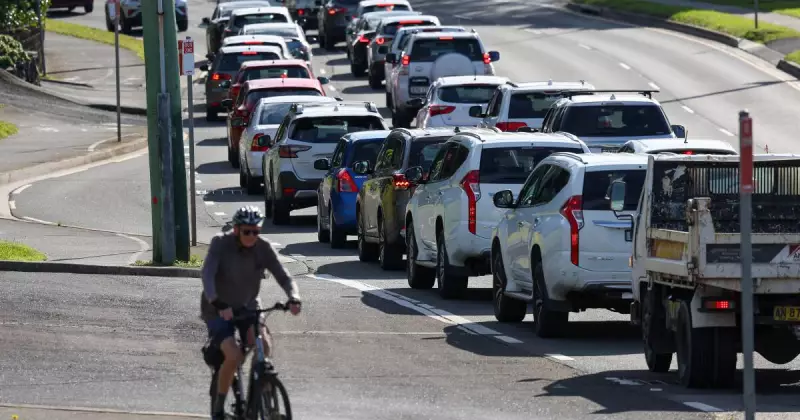
Wollongong drivers are paying a steep price for their daily commute, with new research revealing the financial and time burden of peak-hour congestion on the city's roads.
The High Cost of the Daily Grind
An analysis by iSelect, using ABS and Census data, has put a dollar figure on the frustration of the daily drive. The study found that the average Wollongong motorist loses $1813.60 per year due to the extra fuel consumption and lost time caused by traffic snarls.
In terms of time, that equates to more than one and a half full days wasted behind the wheel annually. On a typical day, the stop-start conditions of the rush hour add an extra 12 minutes and 42 seconds to the average commute.

How Wollongong Compares and Who Suffers Most
Despite the significant cost, the data presents a surprising silver lining for the Illawarra. Wollongong ranks as the second-best city in Australia for traffic congestion, with only Darwin residents experiencing less yearly time lost.
This stands in stark contrast to Sydney, which was named the worst in the country. Sydneysiders lose an average of 34 minutes daily to congestion, totalling four full days per year.
Within the Wollongong metro area, the morning rush hour sees an average speed of just 41.8 km/h, with a 10-kilometre trip taking just under 15 minutes. The study also broke down the impact by profession:
- Farmers faced the greatest time loss, at nearly 21 minutes daily, though their one-way commute averaged over 65km.
- Checkout operators and real estate agents experienced the least disruption, with under 10 minutes of lost time.
The average one-way commute distance for Wollongong workers was 27.4 kilometres.
Roadworks and Political Pressure for Change
Major infrastructure projects are currently underway, aiming to alleviate some of the region's notorious bottlenecks. The most significant is the Mount Ousley Interchange, a multi-year project set for completion in 2028.
This upgrade will separate southbound traffic with a dedicated heavy vehicle lane and include an overpass for a new northern entrance to the University of Wollongong. A key safety improvement will be the elimination of the dangerous right turn from the old Mount Ousley Road across downhill M1 traffic.
Additional work includes new M1 motorway ramps at Dapto. These projects come amid ongoing public pressure for more capacity. Earlier this year, a petition was lodged with the NSW Parliament calling for two extra lanes on a 20-kilometre stretch of the M1 Princes Motorway.
In a response in June, NSW Minister for Roads Jenny Aitchison pointed to the development of the Illawarra-Shoalhaven Strategic Regional Integrated Transport Plan. She stated this plan would guide future investment to "increase capacity, improve travel times and cater for future traffic demands" on the M1 corridor.