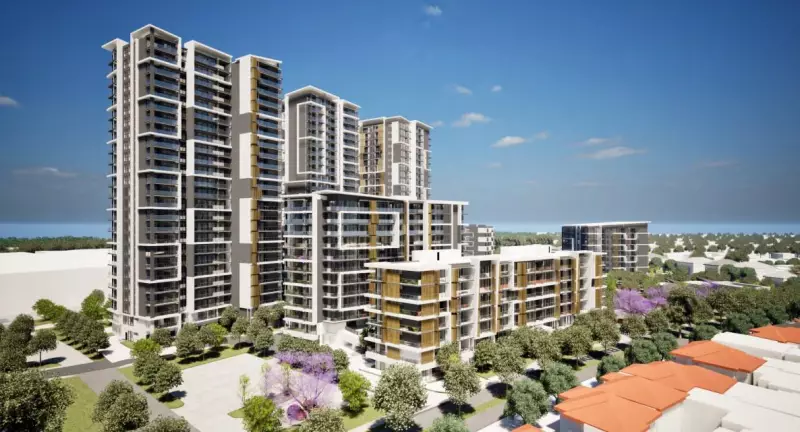
The State Planning Commission has delivered a significant blow to a major Perth development, formally rejecting plans for a high-density, seven-tower apartment complex at the Warwick Quarter shopping centre site. The decision halts a proposal that would have delivered over 1,000 new homes to the northern suburbs.
Commission Cites Overdevelopment and Design Flaws
In a decisive move, the commission refused the development application submitted by the site's owner, Warwick Grove Pty Ltd. The ambitious plan, which was before the commission for a final determination, envisioned constructing 1,040 apartments across seven buildings, with heights ranging from four to ten storeys. The proposal also included plans for extensive commercial and retail spaces.
The commission's rejection was rooted in several key concerns. Planners concluded that the scale and density of the project were not suitable for the local area. They found the proposal to be an overdevelopment of the site, which currently houses the Warwick Quarter shopping centre. Furthermore, the design was criticised for failing to provide sufficient high-quality public open space and for not adequately addressing the interface with surrounding residential properties.

This decision aligns with earlier advice from the City of Stirling's council and planning staff, who had also recommended refusal on similar grounds. The local authority had expressed worries about the project's impact on neighbourhood character and traffic.
Developer's Vision Clashes with Planning Policy
The developer, Warwick Grove, had positioned the project as a transformative transit-oriented development, capitalising on the site's proximity to the Warwick train station. The vision was to create a vibrant, mixed-use precinct that combined residential living with shopping and community facilities.
However, the State Planning Commission determined that the application did not satisfactorily demonstrate how it aligned with the planning framework for the area. The commission's role is to ensure developments meet state and regional strategic objectives, and in this case, it found the proposal lacking. The refusal underscores the rigorous scrutiny applied to large-scale urban infill projects, even when they are located near public transport hubs.
What's Next for the Warwick Quarter Site?
The commission's refusal leaves the future of the 3.2-hectare Warwick Quarter site uncertain. Warwick Grove Pty Ltd now faces a choice: it can revise and resubmit a new development application that addresses the commission's concerns regarding density, design, and public amenity, or it can pursue alternative, potentially less intensive, plans for the land.
This ruling is a clear signal to developers about the State Planning Commission's expectations for major projects in established suburbs. It highlights the delicate balance between increasing housing supply to meet demand and ensuring new developments are sympathetic to their context and provide genuine community benefit. The decision will be closely watched by the property industry as a benchmark for future high-density proposals in Perth's metro area.
The outcome represents a win for local residents and the City of Stirling, who had raised objections, but it also puts a temporary hold on the addition of a substantial number of new dwellings in a suburb well-served by public transport. The path forward now depends on the developer's next move.