The Hunter region is facing a severe and growing housing emergency, with community leaders accusing the New South Wales government of failing to apply its own affordable housing policies to one of the area's largest public land developments.
A Region Missing Out and Falling Behind
This crisis was thrown into sharp relief recently when the Hunter was entirely excluded from the first round of the federal government's $10 billion Housing Australia Future Fund. Meanwhile, in Newcastle alone, approximately 2000 households languish on social housing waitlists. For these families, the shortage is not a distant policy failure but a daily, grinding reality.
"Despite money being spent and lots of promises, we are going backwards," states Tammy Prince-Doyle, president of Family Inclusion Strategies in the Hunter (FISH). Her parent-led organisation supports families navigating the child protection system and witnesses the housing catastrophe firsthand. "Safe, secure, affordable housing is often the number one issue," she explains.

The Human Cost: Families Torn Apart
The story of one mother, referred to as Lisa, illustrates the devastating personal impact. Lisa fled a violent home with her two children, only to have them removed after she could not find stable accommodation. She resorted to sleeping in her car or on friends' couches, with no space available in crisis, transitional, or social housing.
"There's no chance of getting your children back when there is nowhere safe to bring them home to," says Prince-Doyle. "The children remained in care solely because of the lack of housing for Lisa. This story is typical of the stories we hear from women every week."
For FISH, the solution is clear. "For us, social and affordable housing is about bringing families back together," Prince-Doyle emphasises. "It's about restoring a 'normal' life. Housing is so much more than a roof."
Government Policy Inconsistency at Broadmeadow
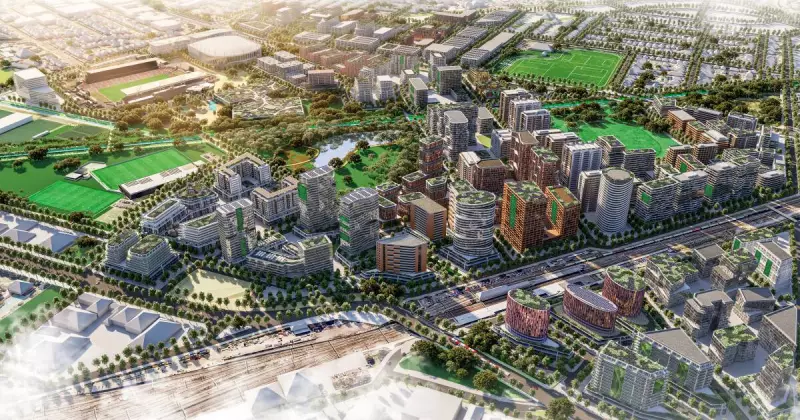
Despite this acute need, the NSW government is not implementing its statewide commitment for public land developments at the major Broadmeadow Precinct. The government's policy is to deliver 30 per cent social and affordable housing on public land. However, the current proposal for Broadmeadow slashes that figure to just 5-10 per cent affordable housing and zero dedicated social housing.
This decision comes as the crisis escalates across regional NSW. The latest National Rental Affordability Index reveals that nearly all households on average incomes in the regions are spending 30 per cent or more of their income on rent, placing them officially in housing stress.
The Hunter Community Alliance (HCA), a coalition of 34 community groups, unions, and faith organisations, has monitored the Broadmeadow redevelopment for years. While acknowledging the project's complexity, the HCA insists on a fundamental principle: public land must be used for the public good.
"The state government's commitments to the rest of the state should also apply here in the Hunter," argues Barbel Winter, Shelter NSW representative with the HCA. "Build at least 30 per cent social and affordable housing on the state-owned portion of the Broadmeadow site."
Winter stresses that the 30 per cent target is not ambitious but the minimum required to address the crisis. Meeting it would provide a pathway for mothers like Lisa to reunite with their children and allow essential workers—nurses, aged-care staff, teachers, and hospitality workers—to live in the communities they serve.
In response, the community is mobilising. On December 5, residents, leaders, and people with lived experience will gather for a public action in Hamilton to share stories and demand the government honour its 30 per cent pledge.
"Housing is everyone's business," Winter concludes. "If we want a thriving, productive and fair Hunter, we must treat it that way—starting with the choices we make about the land we already own."