Graffiti Epidemic Mars Newcastle's Central Business District
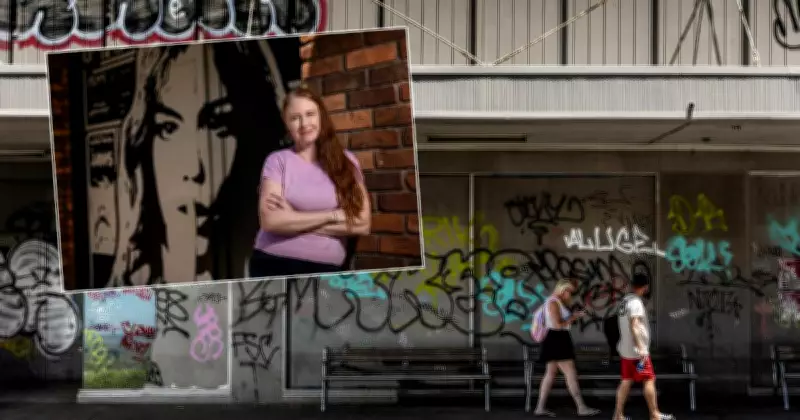
Extensive graffiti vandalism across Newcastle's central business district (CBD) is creating what locals describe as a "terrible" first impression for visitors and residents alike. The problem has become particularly pronounced in areas undergoing construction, with business owners expressing mounting frustration at the constant battle against unsanctioned markings.
Business Owner's Daily Struggle Against Vandalism
Kate Ashcroft, facilities manager of the A-grade commercial building at 727 Hunter Street HQ and a 25-year Newcastle resident, has been dealing with graffiti "on a daily basis" despite extensive security measures. "I've only been in the building three or four months, and the amount of graffiti I'm dealing with for this big commercial building, even though we've got dozens of security cameras around, it's just crazy," she said.
Ashcroft emphasized the negative impact on Newcastle's image: "When people come from all over the world, let alone Australia or Sydney, and jump off at the interchange onto the light rail or wander around Newcastle West, it just looks terrible. It's not a good first impression."

Council Policies and Community Frustration
The City of Newcastle maintains a dedicated graffiti removal team, but their responsibilities are limited to council-managed assets including buildings, outdoor facilities, parks, and playground equipment. Private property owners must handle graffiti removal on their own premises.
Ashcroft reported that after lodging a graffiti removal request with the council in December, the matter was closed about a week later with no action taken. "I believe there's a graffiti team for Newcastle," she said. "I don't know what they're doing, because they're not removing graffiti."
Business Improvement Association's Proactive Approach
Jacinta Fintan, chair of the City Centre Business Improvement Association (BIA) and owner of The Wall Station, acknowledged the graffiti problem while noting that construction areas around Hunter Street Mall and Newcastle West have become particular targets.
"So we are hearing that it's an issue," Fintan said. "It's something the BIA is aware of, but we also understand there's a lot of construction in town, and when those plans roll out there will be more people in town, more visitation, and then there's less vandalism."
The BIA has taken proactive measures, providing grants for five local artists to create murals designed to make business centres feel safer and deter graffiti. "When you curate the right murals in the right locations, they have proven to be a deterrent," Fintan explained.
Council's Priority System and Private Responsibility
A City of Newcastle spokeswoman confirmed that graffiti removal is managed based on assessed priority, with offensive or hate-related graffiti treated as urgent matters. "Highly visible areas including city gateways, transport corridors and high-traffic locations such as Newcastle West and the CBD are a priority," she stated.
The spokeswoman emphasized the responsibility of private property owners: "It's absolutely critical to the presentation of our city that those who are fortunate enough to own a commercial building in our city accept they have a responsibility for removing graffiti when their property is tagged. Expecting ratepayers to maintain a privately owned building is not OK."
Community Members Take Matters Into Their Own Hands
In some instances, residents have intervened directly when confronted with offensive graffiti. Hamilton resident Claire Groombridge discovered hate speech on an electrical box on Beaumont Street and was prepared to cover it with love heart and rainbow stickers before council workers removed it.
"I don't really care whose responsibility it is," Groombridge said. "I just wanted someone to address the hate speech, because I thought we recently passed laws that made that a crime."
The council confirmed that offensive material on the Beaumont Street electrical box was removed within an hour of their awareness, demonstrating their rapid response capability for particularly problematic graffiti.

The ongoing graffiti problem highlights the tension between public presentation, private responsibility, and community expectations in Newcastle's evolving urban landscape.