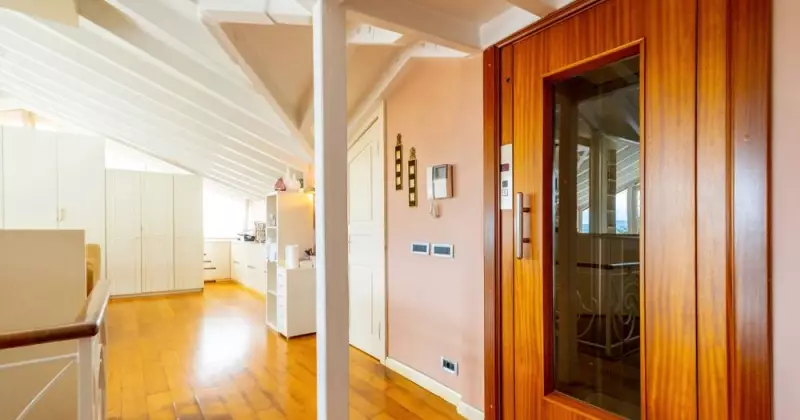
In a Surry Hills design studio on a recent Tuesday, the rustle of trace paper and coffee-stained plans set the scene. "We position the stair here, and the lift sits right alongside," explains Charlotte, the project architect. "It's planned from the start so we don't compromise the kitchen later." This scene is becoming commonplace across Sydney, where domestic lifts are rapidly transitioning from a luxury add-on to a standard inclusion in multi-storey, design-focused residences.
Demographics and Urban Density Fuel the Trend
The move towards integrating home lifts is being shaped by two powerful forces: Sydney's challenging geography and Australia's ageing population. With roughly 17 per cent of Australians aged 65 or older, there is a growing desire to age in place comfortably. Simultaneously, the city's terrain, from inner-east terraces to North Shore split-levels and sloping knockdown-rebuild blocks, makes vertical movement a primary design consideration.
For premium buyers, a lift is increasingly a non-negotiable part of the initial brief. It reduces daily physical strain, accommodates temporary injuries, and makes visits from elderly relatives seamless. Financially, it enhances a property's resale value by signalling convenience and accessibility to downsizers and multi-generational families.

From Showpiece to Seamless Integration
The philosophy has evolved from simply "making the stairs beautiful" to "making movement effortless." In premium developments, the focus is on integrating electric lifts that support the flow of daily life, planned meticulously from the concept stage. For developers in areas like the Eastern Suburbs and North Shore, installing a lift is now a strategic baseline that aligns with market expectations and protects resale value.
Discreet, slim-line shafts that blend with joinery have replaced ostentatious glass towers in the foyer as the marker of sophistication. Where immediate installation isn't feasible, architects are employing "lift-ready" planning—reserving shafts or designing stacked cupboards—to provide low-cost future-proofing.
Smart Design for Compact Sydney Sites
Architects are deploying clever strategies to incorporate lifts efficiently into tight urban footprints. Key approaches include:
- Pairing with Stairs: Positioning the lift shaft directly beside the staircase, creating a compact vertical circulation core.
- Multifunctional Walls: Designing shaft walls to double as storage or to conceal services.
- Strategic Placement: Mapping daily movement patterns (from garage to kitchen, laundry to clothesline) to place the lift at the start and end of key routes.
- Light and Privacy: Using glazed panels and lightwells to bring daylight into the cabin without compromising privacy.
On sloping blocks, intermediate stops prevent awkward mid-landing transfers. Compliance with Australian Standards AS 1735 is essential, as is planning for annual servicing and local parts support.
Planning Ahead to Avoid Costly Mistakes
To ensure a successful installation, architects recommend early consultation with lift providers. Critical planning steps include mapping all stop positions, confirming door swing directions and clearances, and allocating dedicated electrical circuits. Common pitfalls to avoid are leaving the decision too late—which can disrupt finished plans—incorrect sizing, and failing to consider long-term service access.
A case in point is a three-storey coastal terrace where a slim lift shaft reclaimed cupboard space on each level. Groceries move easily from the street-level garage to the kitchen, and older family members can visit for dinner without navigating stairs. The lift, though barely noticed day-to-day, profoundly enhances the home's usability and flexibility.
For Sydney's multi-storey homes, a well-planned domestic lift is no longer an optional luxury but a baseline expectation for design-led, future-proof living. Integrating it from the outset protects long-term value and ensures the home functions seamlessly for all stages of life.