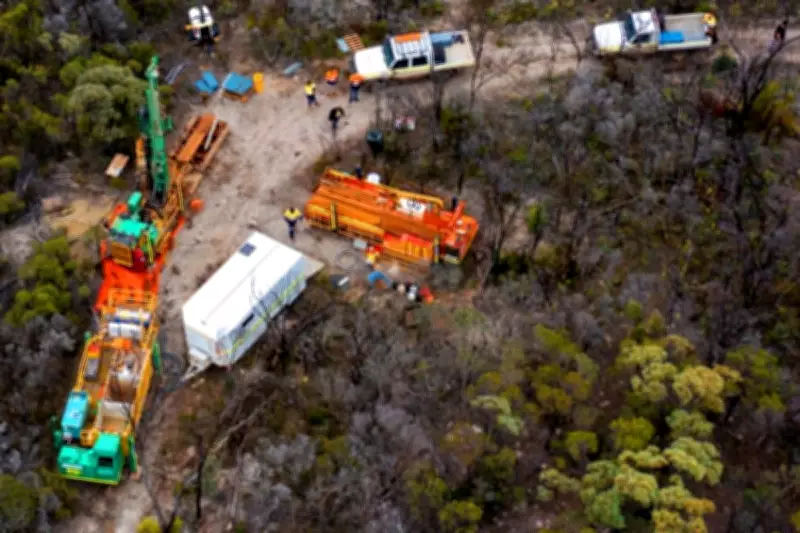
Mount Ridley Mines Unveils Major Heavy Rare Earths Resource in Western Australia
Mount Ridley Mines has revealed a substantial heavy rare earths mineral resource at its namesake project, located 55 kilometres northeast of Esperance in Western Australia. This discovery marks a significant development in the critical minerals sector, positioning the company as a key player in the region.
Impressive Resource Estimates and Composition
The newly inferred resource totals an impressive 122.56 million tonnes, grading 889 parts per million (ppm) total rare earth oxides (TREO), which contains 108,954 tonnes of TREO. Notably, 44,610 tonnes of this is in the heavy rare earth oxides (HREO) category, giving the resource a striking 41 per cent HREO ratio. This high proportion of heavy rare earths is particularly valuable for industrial applications.
The resource is rich in magnet metals such as dysprosium and terbium, with 4,272 tonnes of dysprosium oxide and 719 tonnes of terbium oxide identified. These metals are crucial for manufacturing high-temperature resistant permanent magnets, which are essential components in electric vehicles and wind turbines for power generation.

Geographical Distribution and Co-location Benefits
The resource is divided into two main zones: a central zone, Block 1, with 35.36 million tonnes at 746ppm TREO, and a northern zone, Block 2, with 87.18 million tonnes at 947ppm TREO. This distribution allows for strategic mining and processing planning.
Adding to the significance, the rare earths are found in the same regolith clay horizons where Mount Ridley has been mapping scandium and gallium deposits. This co-location could provide future optionality in processing, material handling, and mining schedules, potentially streamlining operations and enhancing economic viability.
Historical Context and Future Prospects
In October last year, Mount Ridley announced a maiden gallium mineral resource of 838.7 million tonnes at 29.3ppm, containing 24,584 tonnes of gallium. This was followed in November by the identification of a 33-kilometre-long corridor of new rare-earth and gallium targets, suggesting the current resource footprint may expand further.
At the start of the new year, the company added a scandium resource of nearly 368 million tonnes at 57.3ppm, containing 18,855 tonnes of scandium metal from a separate prospect near Esperance. However, management emphasises that the core focus remains on defining high-grade heavy rare earth zones, as these are expected to be the primary revenue generators, with scandium and gallium viewed as potential by-products.
Next Steps and Strategic Importance
With heavy rare earths, gallium, and scandium now in its portfolio, Mount Ridley's next steps involve continued drilling and metallurgical studies. The company aims to determine how these metals can be recovered efficiently, whether sequentially or through a streamlined process that unlocks value from all elements in the system.
If Mount Ridley can scale up its operations while establishing viable processing pathways, it is likely to remain a key focus for investors and industry watchers seeking strategically important supply stories in the critical minerals market.