Central Coast Mining Community Holds Breath as Coal Dispute Puts 300 Jobs at Risk
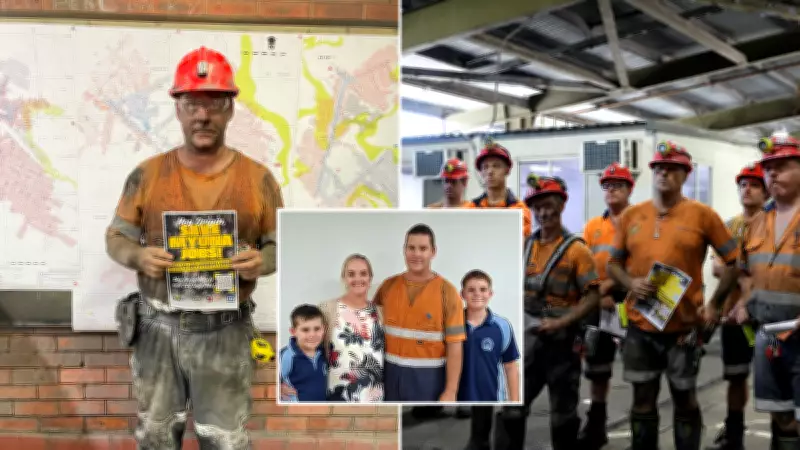
The emotional toll of industrial uncertainty became painfully clear for the Slaney family during a recent car ride home. After a day out, their eight-year-old son made a heartbreaking statement that highlighted the family's growing anxiety. "Our youngest son has a birthday this Thursday," shared Melissa Slaney. "Driving home he said: 'If dad doesn't have a job, don't buy me anything.'"
A Way of Life Under Threat
Melissa grew up as a coal miner's daughter and takes pride in being a coal miner's wife. For the past eight-and-a-half years, her husband Brett has worked at the Myuna Colliery on the Central Coast of New South Wales. "That's all I've known. As a child, teenager, as an adult is men that go off and do night shift down at the coal mines," she explained.
Now the Slaneys' livelihood and that of approximately 300 other miners hangs in the balance due to an ongoing commercial dispute between Origin Energy and Centennial Mining. The conflict centres around the imminent closure timeline of the Origin Eraring Power Station, which receives coal exclusively from Myuna Colliery.

The Captive Mine Dilemma
Myuna Colliery operates as what's known as a "captive mine," meaning it exists solely to supply coal to the Eraring Power Station. Brett Slaney explained the precarious situation: "Being a captive mine, we have nowhere else to go. We can't continue mining and truck or train the coal out. We are solely reliant on that power station being open."
While the power plant's operational life was recently extended for another three years, providing temporary hope for families and the local community, the supply agreement between the two companies remains unresolved.
Negotiation Standoff Between Energy Giants
Origin Energy, which has owned Eraring since 2013, entered negotiations with Centennial Mining following the power station's extension announcement. On February 3, Origin proposed a 12-month coal supply agreement with terms consistent with the existing arrangement.
Greg Jarvis, Origin's head of energy supply and operations, stated: "Our offer enables the continuation of the long-term relationship between our organisations and supports ongoing employment for the Myuna workforce."
Centennial rejected this initial offer, citing the extended lifespan of the power station and the integrated nature of the mining operation. Two days later, Origin presented a second end-of-life agreement, claiming they had "continued to engage openly, constructively and in good faith with Centennial."
Origin defended their position, stating: "Our offer is on consistent terms to today, as we cannot meet Centennial's elevated pricing demand which is forecast to be around $50 million per year above market levels. Over three years, we forecast this is ~$150 million above the cost of coal from other suppliers."
The company further argued that "The cost of operating Myuna is a matter for Centennial and its parent company, Banpu, a company of substantial size and profitability. Origin and NSW households and businesses cannot be expected to wear those costs."
Centennial's Counter-Argument
Centennial rejected the February 5 offer, claiming the proposal would result in weekly losses of approximately $1 million. A company spokesperson responded: "Centennial acknowledges Origin's tabling of a three-year end-of-life coal supply offer and welcomes the movement after months of delay, but the proposal still falls short of what is needed to keep Myuna Colliery open."
The mining company challenged Origin's position: "Origin cannot claim that a fair deal would hurt consumers. The company posted $1.5 billion in profit last year and Eraring is one of its strongest revenue-generating assets."
Centennial emphasised the integrated nature of the operations: "Eraring power station and Myuna Colliery operate as a single, integrated supply chain that underpins energy security in NSW. Trying to separate them is not a transition plan."

The company stated they were seeking a break-even agreement rather than profits: "Myuna is not asking for any profits. It is offering a break-even agreement that allows coal supply to continue through to Eraring's scheduled closure in 2029, protecting 300 direct jobs and thousands more across Lake Macquarie and the Hunter."
Human Impact of Corporate Negotiations
While corporate negotiations continue, the affected miners and their families endure significant stress and uncertainty. Melissa Slaney described the personal toll: "In the last week we haven't slept well, everything's so expensive at the moment, it's really stressful."
The Slaneys face difficult decisions if an agreement isn't reached, potentially requiring them to leave their community or pursue fly-in-fly-out work elsewhere in Australia. Brett expressed his distress about possibly leaving his family: "Honestly, it just makes you sick to your stomach. Thinking about having to leave two young boys and their mother. They're going to miss their father for half the year, their husband for half the year. Not being there when they need you, it makes you sick to your stomach."
The outcome of these negotiations will determine not only the future of 300 mining positions but also the stability of families and communities that have depended on the coal industry for generations.