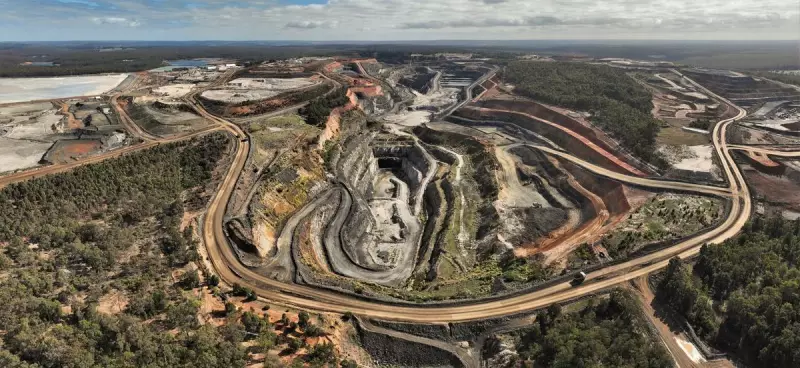
The risk to public health and the environment from dust at Western Australia's massive Greenbushes lithium mine remains unacceptably high, according to the state's environmental watchdog, despite the recent installation of new suppression technology.
Regulator Demands Proactive Dust Control
The Department of Water and Environmental Regulation (DWER) has formally approved the use of dust suppressant sprinklers on crushed lithium-bearing rocks at the mine's third processing plant, which was commissioned last week. However, the regulator has simultaneously delivered a stark assessment, stating the potential risk from dust emissions is still classified as "high".
In its decision, DWER noted that the proposed changes to dust control are "unlikely to significantly alter the risk". To enforce stricter management, the department has updated the mine's works approval to mandate proactive application of dust suppression whenever visible dust is observed, rather than relying on reactive measures.

Mounting Pressure from the Local Community
The regulatory action comes amid growing pressure from residents in the nearby town of Greenbushes, who have long complained about pollution from the operation. Locals have reported that mine dust regularly coats plants, houses, and even the town's primary school.
The mine is operated by the Talison Lithium joint venture between South Perth-based IGO and China's Tianqi. Talison's chief executive, Rob Telford, acknowledged in April that the joint venture had "clearly underestimated" the dust impacts from its most recent expansion. "We deeply regret the impacts felt by members of the Greenbushes community," Mr Telford said at the time, expressing confidence that improvements could be made.
A Historic Mine Faces a Modern Challenge
The Greenbushes site, originally a tin mine in the 1800s before transitioning to lithium in the 1980s, is now Western Australia's most profitable lithium operation. Its footprint has grown significantly in recent years, with another expansion approved by the Environmental Protection Authority in September.
The ongoing dust issue highlights the complex balance between capitalising on the global lithium boom and managing the environmental and social impacts on local communities. The DWER's latest intervention makes it clear that the mine's operators must take more decisive and effective action to mitigate the dust problem that continues to plague the South West region.