Great Southern Mining Expands Golden Boulder Gold Strike to 3.5 Kilometres in Western Australia
Perth-based gold explorer Great Southern Mining has significantly advanced its Golden Boulder discovery in the gold-rich Duketon belt of Western Australia, extending known mineralisation to an impressive 3.5-kilometre strike along the interpreted Rosemont Shear Zone. This expansion builds substantial scale and momentum for the project, positioning it as a notable contender in one of Australia's most prolific gold regions.
Impressive Drilling Results Highlight Shallow Gold Potential
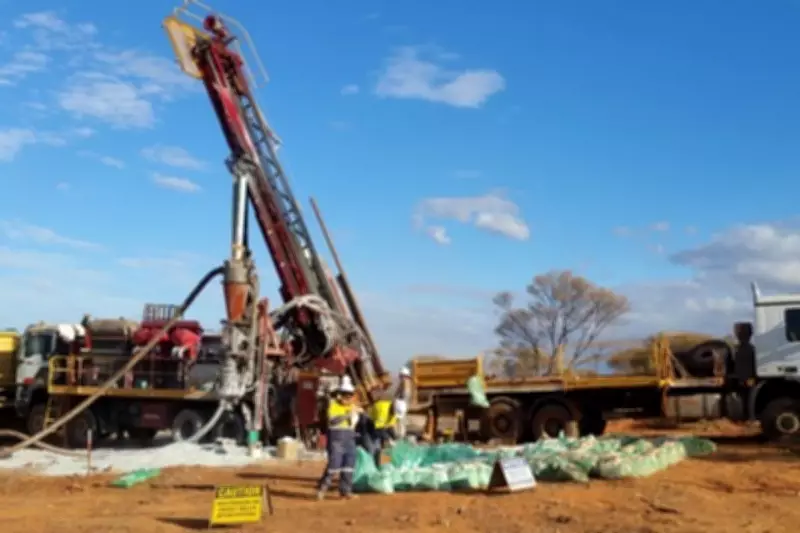
The final assays from last year's 56-hole reverse circulation (RC) drilling program have delivered a series of strong shallow gold intercepts, reinforcing continuity along the Golden Boulder Main Line trend and opening new exploration ground to the south. Key highlights include:
- 5 metres grading 3.5 grams per tonne (g/t) gold from 39 metres depth.
- 2 metres at 1.1 g/t gold from 74 metres depth.
- 8 metres at 1.1 g/t gold from 45 metres, including a 4-metre section at 2.2 g/t.
- 2 metres at a high-grade 5.0 g/t gold from 86 metres depth.
These results not only confirm near-surface mineralisation but also reveal solid hits below 70 metres, indicating stacked mineralised lodes throughout the shallow system. With most drilling remaining less than 100 metres deep, substantial depth potential remains largely untested, offering significant upside for future exploration.

Historical Context and Geological Significance
The Golden Boulder project is situated along a prolific north-south structural corridor that hosts several multi-million-ounce gold operations, such as Regis Resources' Rosemont deposit and Genesis Minerals' Laverton tenure. The geological framework involves stacked lodes within the Rosemont fault zone, a 60-kilometre-long structure containing multiple deposits, including the two-million-ounce Rosemont gold mine and the 380,000-ounce Baneygo deposit.
Gold in this area is hosted in a fractionated dolerite, similar to Kalgoorlie's renowned Golden Mile. Great Southern Mining believes that if the stacked lodes prove as regular and deep as those in Kalgoorlie, Golden Boulder could rapidly evolve from an interesting discovery into a serious resource candidate. Historical drilling at the site was shallow and sparse, with few holes exceeding 40 metres, yet it yielded 1,915 tonnes at 28.6 g/t gold for 1,761 ounces along a 3.7-kilometre strike, underscoring the system's strong pedigree.
Future Exploration Plans and Strategic Developments
Great Southern Mining has successfully achieved key objectives, including extending strike length, improving mineralisation continuity in the north, and defining new mineralisation in previously undrilled southern areas. The company is now preparing for an upcoming diamond drilling program, co-funded through the Western Australian Government's Exploration Incentive Scheme, set to commence in the coming weeks. This program will target deeper structural controls to better understand the drivers behind multiple gold trends and deliver an updated stratigraphic and structural model for future targeting.
Additionally, Great Southern will resume RC drilling in early April to pursue higher-grade extensions and infill areas, working towards establishing a maiden JORC-compliant resource. With gold mineralisation now defined across 3.5 kilometres of strike in a highly productive belt and most drilling still shallow, Golden Boulder is rapidly emerging as a discovery with considerable growth potential. In a buoyant gold price environment, such shallow ounces with upside in a strategic location are likely to attract significant attention from investors and industry stakeholders.