Winter in Melbourne has been particularly brutal this year, with many homes feeling colder inside than out. One homeowner measured their living room at 12 degrees Celsius, well below the World Health Organization's recommended indoor temperature of 18 to 22 degrees for cold seasons.
According to the government website Your Home, up to 40 per cent of a home's heating energy can be lost through windows. Sustainability Victoria notes that a single pane of bare glass can gain or lose up to 10 times more heat than the same sized area of uninsulated wall.
Philip Oldfield, head of school at UNSW Built Environment, explains that heat will find any gap to escape, such as around windows. To detect drafts, run your fingers along window frames or use a candle to see if the flame flickers near suspected gaps.

Steve Turnock from Geelong Sustainability suggests insulation film as a cheap alternative to double glazing. This transparent material is applied with double-sided tape and sealed with a hair dryer, creating a barrier between the window and indoor air. It can be ordered online if not available at local hardware stores.
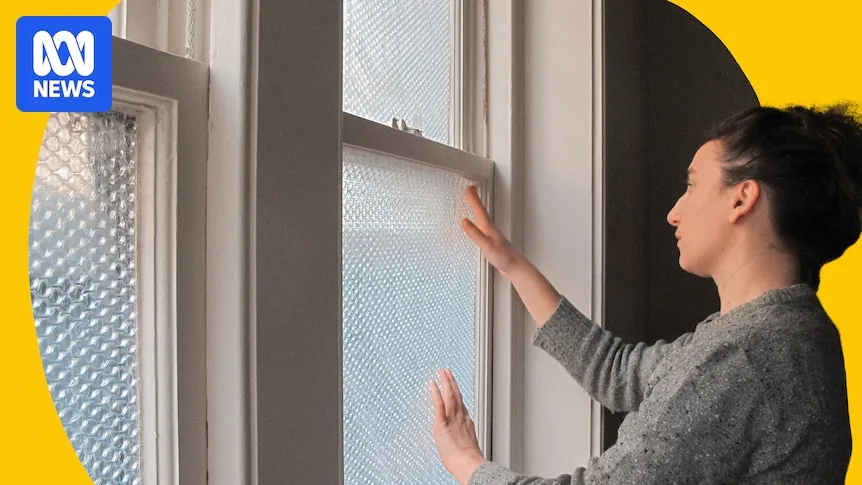
Another budget option is bubble wrap, recommended by building energy assessor Jenny Edwards. Cut bubble wrap to fit each windowpane, spray the glass with water, and apply the wrap flat-side down. This can increase the base temperature by one or two degrees and reduce heat loss. It is easily removed, reusable, and also helps prevent heat from entering in summer.