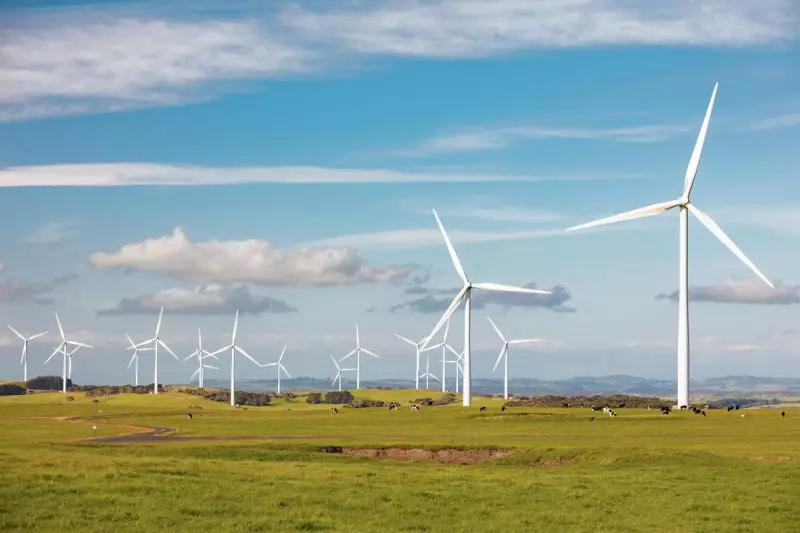
The head of wind energy contractor Vestas in Australia has forecast a major wave of investment will hit the sector from mid-2026, ending a current period of stalled development. This surge is seen as critical for Western Australia, which is scrambling to build enough renewable capacity before the state's promised closure of coal-fired power stations by 2030.
Breaking the Investment Drought
Vestas national chief Danny Nielsen said a so-called "wind investment drought" across the country is set to break next year. He likened the coming influx of capital to the sudden release of pressure, stating, "You keep hammering the bottle on the bottom and suddenly everything gets released out."
Mr Nielsen pointed to a pipeline of projects now progressing through development, environmental approvals, and grid connection processes. This activity is essential to meet the national target of 82 per cent of power generated by renewables by 2030.

Western Australia in the Spotlight
The local Vestas boss was particularly bullish on Western Australia's prospects. "WA is exciting," Mr Nielsen said, highlighting a state government committed to driving change, active customers, and some of the world's best wind resources.
Vestas itself has about 10 projects in the pipeline in WA. The recent final investment decision by Tilt Renewables for the Waddi Wind Farm in the Northern Wheatbelt pushed Vestas' order book in the state above 1 gigawatt—enough to supply power for about 68,000 homes and equivalent to roughly a quarter of peak summer demand on the main grid.
Construction is already underway on key enabling infrastructure like the Clean Energy Link North transmission line, which will connect new projects to the grid. Major builds that started in 2025 include the Warradarge expansion and the Kings Rocks wind farm, both backed by state-owned generator Synergy.
The Race Against the 2030 Deadline
Despite the optimistic outlook, industry leaders warn the timeline to replace coal is tight. Former Premier Mark McGowan announced in 2022 that state-owned coal power stations would close by the end of the decade.
Several large projects are in the approval phase, including a massive $4.5 billion Synergy development at Tathra, north of Perth. The push aligns with CSIRO analysis projecting wind and solar will be the cheapest forms of electricity generation by 2030.
The coming years will be a crucial test of whether investment can be unlocked fast enough to ensure a smooth transition away from coal and keep the lights on in Western Australia.