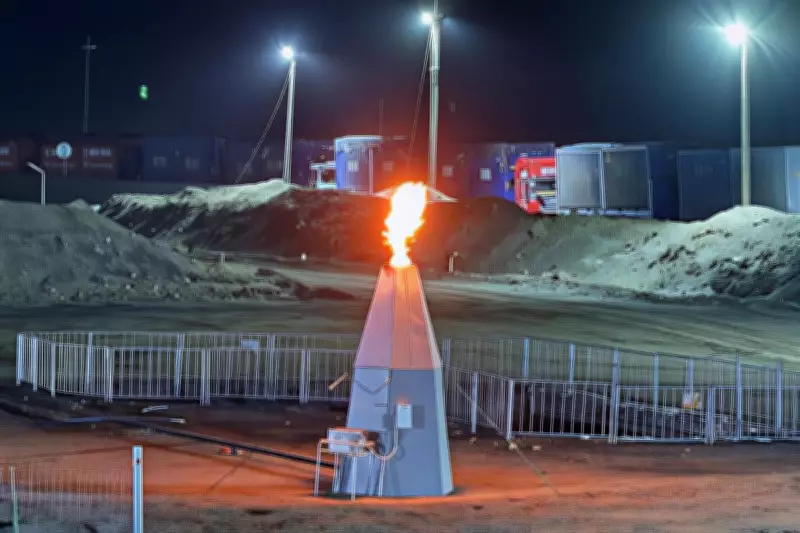
TMK Energy Achieves Record Gas Production in Mongolian Pilot Project
TMK Energy has significantly ramped up gas production at its flagship Gurvantes XXXV Project in Mongolia's South Gobi Basin, delivering a series of record-breaking results from recent wells. The company is steadily advancing toward commercial flow rates, bolstered by strong operational performance and strategic leadership continuity.
CEO Contract Extension and Production Milestones
The company has secured an extension for Chief Executive Officer Dougal Ferguson, a seasoned operator with over five years of involvement in the project. This move is seen as a stabilising factor as TMK edges closer to commercial production. Recent wells, particularly the standout LF-07, have injected fresh momentum into the pilot program, driving notable increases in daily and monthly gas output.
In early March, LF-07 surged to more than 31,800 standard cubic feet per day (scfd), surpassing previous highs near 25,000 scfd. This performance has underpinned sharp uplifts in weekly and monthly averages, marking five consecutive months of rising production. The trend reflects a consistent acceleration, with each new well contributing to enhanced reservoir drawdown and more stable gas flows across the field.

Geological Insights and Resource Potential
Drilling at Gurvantes XXXV has intersected thick, laterally continuous coal seams, with cumulative thicknesses exceeding 60 metres in some areas. This provides a robust storage medium for gas, supporting long-term production prospects. The project currently hosts a contingent resource of 1.2 trillion cubic feet of gas, with additional prospective resources estimated at over 5 trillion cubic feet, highlighting significant upside potential.
Spanning 8,400 square kilometres in a coal-rich basin that stretches about 150 kilometres, the project benefits from proximity to existing mining operations, reinforcing the continuity of the coal system. The reservoir's behaviour aligns with a textbook coal seam gas dewatering curve, where declining water production and increasing gas desorption indicate approaching critical thresholds.
Strategic Developments and Market Opportunities
TMK's staged strategy has evolved from an initial three-well test to a fully-fledged seven-well pilot program, with LF-07 emerging as a top performer. Improved well design and placement have led to faster ramp-up times and stronger early gas flows, while emerging connectivity between wells suggests the reservoir is functioning as an integrated system.
Beyond operational gains, TMK has laid groundwork for pilot development through binding agreements, including a deal with Beijing-based J-Energy to accelerate technical planning and marketing. A potential gas-to-power arrangement with German-backed Jens Energie could monetise early-stage volumes via electricity supply, helping Mongolia address energy security by replacing imported gas.
The project targets an initial supply of 5,000 cubic metres of gas per day, scalable to 15,000 cubic metres per day under extended arrangements. Its location less than 20 kilometres from the Chinese border and near existing gas infrastructure offers a low-barrier entry into one of the world's largest energy markets, amid rising Asian demand for gas to balance energy security and emissions reduction.
Future Outlook and Commercialisation Path
Looking ahead, TMK plans to optimise existing wells, replicate the LF-07 design in new locations, and expand the pilot footprint to build the production base needed for commercial development. With leadership secured and momentum building, Gurvantes XXXV is well-positioned to transition from a pilot project to a production-ready asset with substantial commercial potential, aligning with Mongolia's urgent energy needs and global market trends.