TMK Energy and Mongolian Government Launch Joint Study on Coal Seam Gas Integration
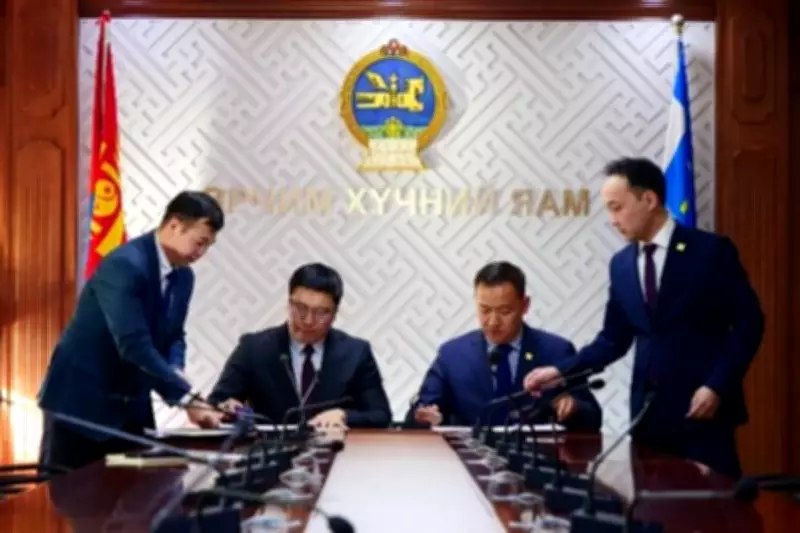
TMK Energy has entered into a strategic partnership with Mongolia's Ministry of Energy, signing a memorandum of understanding to collaboratively investigate the accelerated adoption of natural gas within the nation's energy framework. This agreement holds significant potential to elevate TMK's prospects if coal seam gas receives approval as a supplementary fuel source.
Focus on Peak Load Power and Energy Reliability
The MOU will examine the incorporation and advantages of integrating natural gas, including coal seam gas—also referred to as coal bed methane—into Mongolia's medium and long-term energy strategies. The joint study will initially concentrate on baseline assessments of methane gas for peak-load power generation, aiming to establish a dependable and continuous energy supply during high-demand intervals.
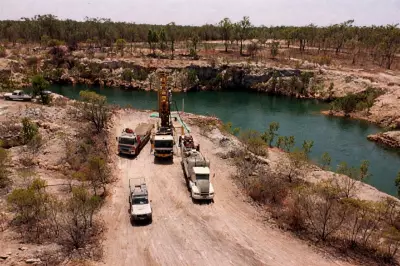
This preliminary research will specifically target the utilisation of coal seam gas to fuel peak load power supply and evaluate how Mongolia's extensive resources can most effectively strengthen its energy supply chain. TMK, with its Gurvantes XXXV coal seam gas project located in southern Mongolia, is well-positioned to capitalise on the potential inclusion of gas as a complementary fuel to existing coal usage.

Addressing Mongolia's Energy Challenges
Mongolia has encountered growing difficulties with its electricity system, grappling with supply limitations during peak winter months as demand for heating and industrial operations surges substantially. Current generation capacity and ageing infrastructure have led to problems in meeting peak demand, resulting in supply disruptions.
There is a pressing need to develop additional, flexible fuel sources to guarantee stable supply during peak load periods, and natural gas emerges as a clear candidate to enhance the nation's supply levels. The Ministry's responsibility involves developing, managing, and regulating Mongolia's energy sector to ensure system reliability and support national development goals.
Leveraging the country's abundant coal seam gas resources could provide a solution to Mongolia's power supply needs as it pursues a long-term strategy for energy generation requirements.
Recognition and Potential of Coal Seam Gas
This Memorandum of Understanding marks a notable advancement for TMK and the Mongolian Government, offering acknowledgment to the emerging coal seam gas industry in Mongolia. It further indicates government recognition that natural gas remains a feasible alternative to coal, potentially improving long-term energy security and diversifying domestic energy sources.
TMK Energy chief executive officer Dougal Ferguson emphasised that natural gas has the capacity to deliver a cleaner, efficient, and highly responsive energy source that can complement existing and future generation infrastructure while reducing dependence on imported electricity.
Understanding Coal Seam Gas and Recent Achievements
Coal seam gas is a type of natural gas, typically consisting of 95 to 97 percent pure methane. It is usually adsorbed to the coal matrix and confined within the coal by water pressure. Extracting coal seam gas to the surface via gas wells generally involves removing water from coal fractures and cleats, which lowers pressure and enables methane release from the coal matrix. It is classified as an unconventional gas.
Coal seam gas is regarded as a cleaner fuel because it generates approximately half the carbon emissions compared to coal-generated electricity and burns more cleanly than other fossil fuels. In contrast, natural gas is a conventional gas, typically sourced from porous sandstone reservoirs with an impermeable rock layer that traps the gas under buoyancy, often allowing it to rise to the surface through gas wells due to pressure without pumping requirements.
Recently, TMK achieved another gas production milestone at its Pilot well project, part of the Gurvantes coal seam initiative. The company set a new daily production record of 674 cubic metres of gas, equivalent to over 23,800 standard cubic feet per day, on 21 January. A new monthly gas record of 18,370 cubic metres was also attained.

Dual Benefits for Mongolia's Energy Strategy
Mongolia's coal seam gas resources could serve dual purposes. The country aims not only to reinforce its own energy supply but also benefits from proximity to China's northern gas pipelines, which could provide substantial gas volumes from any near-term gas development projects.