Taxpayers to Foot Bill for Collie Coal Mine Extension as WA Government Grants Five-Year Lifeline
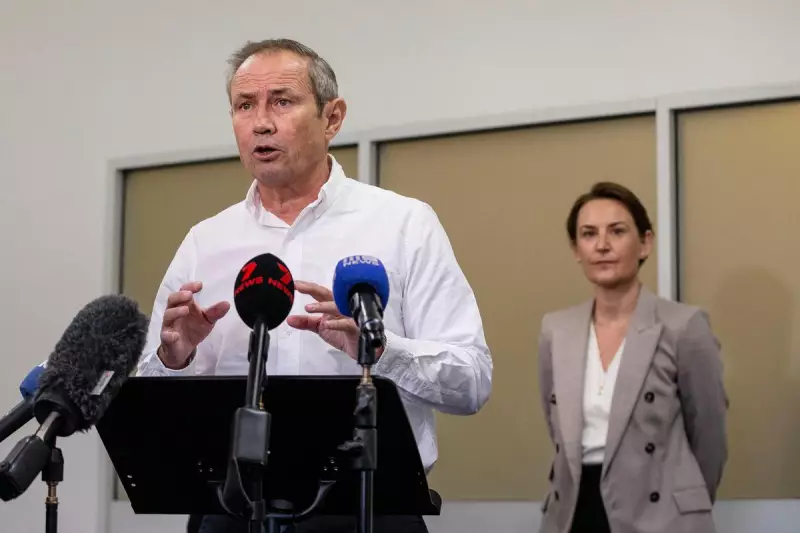
Western Australian taxpayers will continue subsidising coal mining operations in Collie until at least 2031, following a new State agreement that extends financial support for the foreign-owned Griffin Coal mine. Premier Roger Cook confirmed the five-year extension on Wednesday, despite having vowed just six months earlier to cease funding by June 2026.
Government Backflip on Funding Commitment
In a significant policy reversal, the Cook Government has committed to propping up the privately-owned Bluewaters power station through continued taxpayer support for Griffin Coal. This decision comes after government payments to keep the mine operating reached $308 million by June 2025, with Premier Cook previously insisting that the mine's private owners and customers should bear the mounting costs.
"This funding support will cease in June 2026," Mr Cook told Parliament on May 27, 2025. However, speaking in Collie on Wednesday, the Premier justified the about-face by citing energy reliability concerns.

Energy Security Concerns Drive Policy Shift
"If we did not intervene, it would have meant we were switching the lights off in Western Australia. That's not acceptable," Mr Cook stated. He emphasized that the extension provides certainty for Bluewaters' operators, industry customers, and Collie's workforce during the state's energy transition.
While insisting the cost to taxpayers would be "significantly" less than the $308 million spent since 2022, the Premier could not specify the exact amount, promising to reveal details once agreements are finalised in Parliament.
Transition Timeline Maintained Despite Extension
Mr Cook maintained that the funding extension does not jeopardise Western Australia's commitment to retire state-owned coal-fired power stations by 2030. "We have a rock-solid commitment that we will retire the State-owned coal fired power stations by 2030," he affirmed.
Energy and Decarbonisation Minister Amber-Jade Sanderson acknowledged the challenges of transitioning away from coal but expressed confidence in WA's pathway. She highlighted $50 billion worth of renewable energy projects in the pipeline, suggesting that even if only half materialise, they would meet future energy demands.
Industry Response and Future Consolidation Plans
The Chamber of Minerals and Energy WA welcomed the extension, with chief executive Aaron Morey emphasising that key resources operations still rely on coal for production processes. "Industry supports the pursuit of net zero by 2050 but the pathway is not linear," Mr Morey noted, stressing the need to safeguard regional jobs during the transition.
Meanwhile, the government announced the formation of a new Collie Basin Consolidation Taskforce that will explore merging Griffin Coal with Premier Coal to improve operational efficiency. The taskforce is expected to report back within six months.
Renewable Energy Challenges Acknowledged
Minister Sanderson identified large-scale wind energy as critical to WA's energy transition but acknowledged implementation challenges. "I don't think community opposition is one of them. I think community education is actually something that we can do better," she remarked, suggesting improved public engagement could facilitate renewable project development.
The extension decision comes amid warnings from the Australian Energy Market Operator about potential electricity generation shortfalls in WA's South West grid by 2033, adding urgency to the state's energy transition planning while maintaining current energy security.