Major Fire Erupts at Geelong Oil Refinery, Investigation Timeline Extended
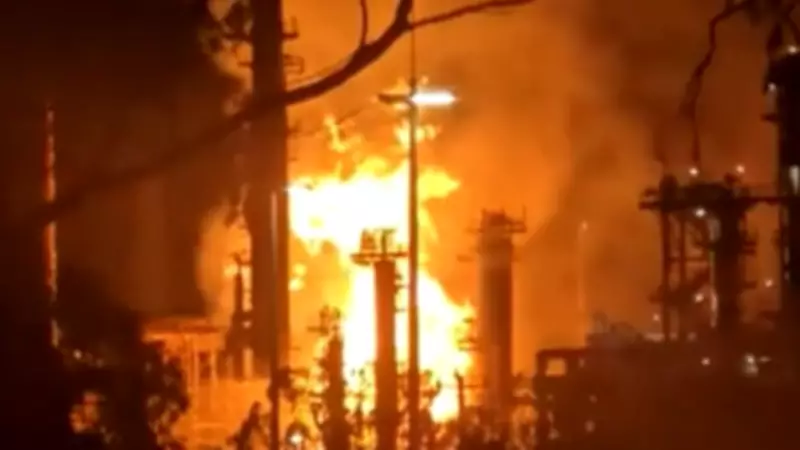
A significant fire, accompanied by multiple explosions, has broken out at the Viva Energy Refinery in Corio, north of Geelong, raising serious concerns about Australia's fuel security. The incident occurred late on Wednesday night, with Fire Rescue Victoria responding to reports of blasts in the plant's motor gasoline section.
Investigation Faces Substantial Delays
WorkSafe Victoria has announced that a comprehensive investigation into the cause of the inferno will be launched once the site is deemed safe. However, officials caution that this process could take more than twelve months to complete. Sam Jenkin, WorkSafe's chief health and safety officer, emphasized that the immediate priority is ensuring all work on the site is conducted safely, without risk to workers or the public.
"We understand there is significant community concern about this incident and will continue to engage with our stakeholders during the ongoing response and recovery," Mr. Jenkin stated.

Firefighting Efforts and Cause Identified
Firefighters are expected to remain on site through Thursday night to monitor and prevent any chance of reignition. FRV deputy commissioner Michelle Cowling confirmed that the blaze was caused by equipment failure. While the fire is not yet fully under control, it is well contained within a specific section of the refinery.
FRV assistant chief fire officer Mick McGuinness described the situation as particularly dangerous due to the presence of highly flammable materials, including liquid hydrocarbons and gases, which are suspected to have fueled the flames.
Impact on Fuel Production and Supply
The Viva Energy Refinery, operational for over seventy years, supplies ten percent of Australia's fuel, fifty percent of Victoria's fuel, and processes up to 120,000 barrels of oil daily. It is also the sole Australian manufacturer of aviation fuel and the primary provider for Geelong service stations.
Energy Minister Chris Bowen acknowledged that the incident will impact production, with jet fuel and diesel output continuing at reduced levels as a safety precaution. Worker and union member Tony Hines suggested the facility could be offline for "weeks at a minimum."
Authorities Urge Calm Amid Global Tensions
Victorian Premier Jacinta Allan described the refinery as a "critical part" of Australia's fuel security, especially given the ongoing war in Iran, which has blocked twenty percent of global oil supplies through the Strait of Hormuz. She urged Australians to avoid unfounded speculation and panic, noting that fuel supply remains efficient for now.
NSW Premier Chris Minns echoed this sentiment, reassuring the public that fuel supply numbers are consistent with pre-conflict levels. Viva Energy CEO Scott Wyatt expressed "a high degree of confidence" in the company's ability to substitute lost production and maintain market supply.
Community and Environmental Concerns
The fire triggered explosions and released a cloud of toxic smoke over Geelong suburbs, prompting initial Watch and Act alerts from the Country Fire Authority. These have since been downgraded, with the CFA reporting reduced threat levels but advising caution in Corio, Norlane, and North Shore areas.
Geelong Mayor Stretch Kontelj highlighted the fragility of Australia's energy security, with only two operating oil refineries remaining—the Ampol Lytton refinery in Brisbane and Viva Energy's Geelong facility. "It just shows that we, as a country, need to invest more in this type of capability," he remarked.
Broader Implications for Fuel Security
Professor Yuan Chen from the University of Sydney noted that operating conditions and equipment degradation over time at aging facilities like Viva Energy can increase the likelihood of such incidents. With Australia refining only twenty percent of its local liquid fuel demand and importing eighty percent, this fire may heighten reliance on fuel imports.
No injuries have been reported, and Victoria Police will commence an investigation into the cause. Firefighting efforts involve up to fifty vehicles, with the fire expected to burn for several more hours despite a reduction in intensity.