Western Australia's Public Sector Executive Ranks Experience Significant Growth
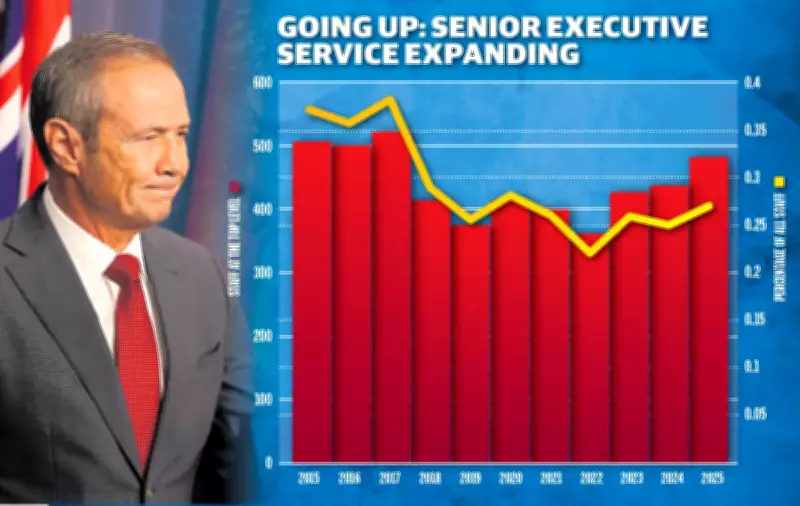
New analysis reveals a substantial expansion in Western Australia's highest-level bureaucratic positions, with the senior executive service growing more than 32 percent between 2022 and 2025. This increase represents the addition of over 100 top bureaucrats during this three-year period, bringing the total number of senior executives to surpass 480 staff members.
Historical Context and Current Figures
The Public Sector Commission data shows this growth follows a period of contraction under former premier Mark McGowan, who campaigned in 2017 on reducing the senior executive service by 20 percent. The executive numbers reached their lowest point at 375 staff in 2022 before beginning their current upward trajectory.
Despite the recent increase, the current executive count remains below the peak of 522 officials recorded during the final days of the previous Liberal Government administration.

Driving Factors Behind Public Sector Pay Expansion
The growth in executive positions coincides with broader changes in Western Australia's public sector compensation landscape. The state's quarterly pay bill has experienced a dramatic 48 percent increase over the past five years, driven by several key factors:
- Implementation of more favourable pay agreements for public sector workers
- Removal of previous wage caps and hiring freezes
- Significant workforce expansion across government departments
This represents a notable shift in public sector management approaches between the McGowan and Cook governments, marking a departure from earlier austerity measures.
Government Response and Spending Controls
A State Government spokesman has defended the executive growth, emphasising that senior staff ensure "timely delivery of the government's commitments for WA communities." The government points to spending controls implemented in 2021 that introduced a cap limiting executive salaries to 0.9 percent of total public sector pay.
"Public spending on senior officer salaries remains, and has remained, below the 0.9 percent limit since December 2021," the spokesman stated. "It currently is 0.73 percent. It was double this under the Liberals and Nationals in 2017."
Based on these figures, estimates suggest senior executive compensation would total just over $141 million through 2026. The Public Sector Commission further notes that senior executives constitute less than 0.3 percent of total public sector staff, significantly lower than during the previous Liberal administration.
Opposition Criticism and Frontline Service Concerns
Shadow minister for public sector reform Jonathan Huston has criticised the government's priorities, arguing that management positions have grown disproportionately compared to frontline services. He points to Public Sector Commission data showing management positions experienced the third-highest rate of increase across all occupational categories.
"It's simple. More people means we need more teachers, police and emergency workers, not a management, marketing and clerical layer which has grown 23 percent," Mr Huston stated.
The opposition highlights concerning statistics, noting that while Western Australia's population has grown by 13 percent, police officer numbers have increased by only 7 percent - representing a shortfall of approximately 400 officers based on population growth rates.
Broader Economic Implications
The revelations about Western Australia's public sector pay growth come amid broader economic concerns. Economists have warned that increased government spending contributes to Australia's ongoing inflation challenges and worker shortages, placing additional scrutiny on public sector compensation practices.
The expansion of Western Australia's public sector executive ranks represents a significant shift in government workforce management, with implications for service delivery, budgetary considerations, and broader economic policy discussions.