Trump's Economic Boasts Face Scrutiny from Australian Expert
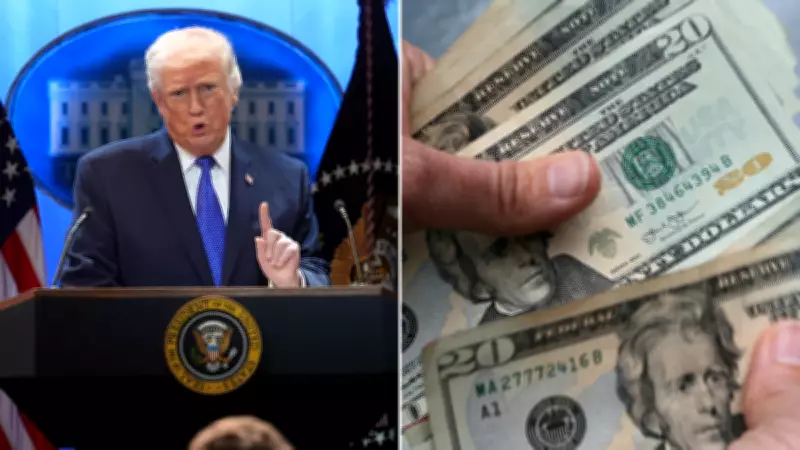
In a recent interview on Fox Business, former US President Donald Trump made a bold declaration as he campaigns for the upcoming midterm elections, stating, "I think we have the greatest economy actually ever in history." This grand claim followed a tweet where he praised his economic achievements as "incredible," echoing sentiments from American political commentator Clay Travis, who described Trump's first year in office as a runaway success with 4.4% GDP growth, 2.4% inflation, and a record-high stock market.
Economist Urges Holistic View Beyond Headline Numbers
However, Australian economist Professor Pedro Gomis-Porqueras from the Queensland University of Technology advises caution. He emphasizes the need for a more comprehensive analysis when assessing economic health. "One has to have a more holistic view when trying to assess the economy," he explained. "Focusing on a couple of headline numbers without any context may portray a description that is not necessarily entirely correct."
Gomis-Porqueras, who has experience working and studying in the US, points out that while GDP—the total monetary value of goods and services produced—can indicate prosperity, it doesn't automatically translate to improved living standards for all citizens. For instance, the US faces higher unemployment rates and shorter life expectancy compared to Australia.

K-Shaped Economy and Widening Inequality
The economist highlights a critical issue: the US is experiencing a K-shaped economy, where inequality is widening. "As the economy grows, the size of the pie increases, but it doesn't mean everyone gets an equal slice," he said. "Folks in the higher income distribution ladder are getting more of the pie rather than those on the bottom." This disparity means that while some prosper, others struggle, with consumer sentiment declining and job creation lagging.
Concerns Over Erosion of Data Credibility
Another alarming factor is the Trump administration's attempts to undermine institutions that report economic data. Gomis-Porqueras cites an incident where White House economic adviser Kevin Hassett suggested disciplining Federal Reserve researchers for findings on tariffs. "This seems to me a dangerous and slippery slope that can't necessarily bring the best outcomes for the US economy," he warned.
He recalls past actions, such as Trump firing Dr. Erika McEntarfer from the Bureau of Labor Statistics over a disputed jobs report, as examples of shaping discussions when data doesn't align with political narratives. "Once you lose faith in institutions like the central bank, which provide crucial data for decision-making, that's a big problem," Gomis-Porqueras added.
Call for Critical Analysis in Economic Education
In his teachings, Gomis-Porqueras stresses the importance of critical thinking when evaluating economic data. "I want to teach students that one has to be more critical in judging data and understand that just looking at one piece of data won't give us the full picture," he concluded, urging a nuanced approach to economic assessment beyond partisan claims.