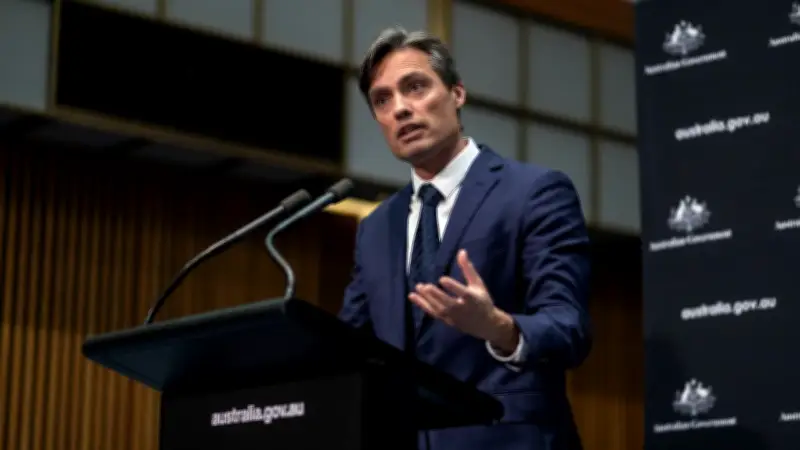
Australia's world-leading tobacco control policy is "under threat" due to sky-high cigarette taxes, a former deputy chief medical officer has warned. Dr Nick Coatsworth has used World No Tobacco Day to renew calls for the Albanese government to cut the tobacco excise, warning the current "prohibition approach" was making the "wheels fall off our tobacco control policy."
Australia is consistently ranked as having the most expensive cigarettes of any major country, with the tiny and isolated Marshall Islands being the only place where a pack costs more. However, surging tobacco excise rates, which have increased from $18.99 to $30.56 for a pack of 20 in just the last six years, have led to an explosion in the nation's illicit tobacco trade. The Australian Border Force estimates organised crime gangs now control up to 75 per cent of the market.
In Victoria, a fight for control of the multi-billion-dollar black market has led to more than 200 firebombings since early 2023. Federal government tobacco excise revenues have also collapsed from $17 billion in 2019 to just $5.5 billion projected for 2025-26.

In a video uploaded to LinkedIn, Dr Coatsworth said while many anti-smoking advocates had used World No Tobacco Day to remind people of the harm of smoking, they needed to realise Australia's tobacco control policy was at risk of collapse. "Our world-leading tobacco control program in Australia is under threat, with early evidence from West Australian studies showing an uptick in the number of young Australians aged between 18 and 25 taking up the habit," he said.
"We need to understand that a multi-pronged approach is required to get control back – an approach that may well require a decrease in the price of legal cigarettes, an approach that will require improvements in law enforcement and finally an understanding and a shift in opinion that there are less harmful forms of nicotine delivery."
The former deputy chief medical officer noted governments in the United Kingdom and New Zealand had recognised vaping was less harmful than smoking and could be an "important part of getting people off smokes." "Not so in Australia, where the prohibition approach has really started to make the wheels fall off our tobacco control program. It's time for a new approach," he said.
In a post accompanying the video, Dr Coatsworth said all anti-smoking advocates could agree on at least three things: "smoking kills," the illicit market was "undesirable and compromises tobacco control efforts" and law enforcement was a "critical pillar" of the response to the illicit market. He added that what separated realists from those with a blind commitment to the anti-smoking cause was the recognition of several points, including acknowledging "excise reduction should form part of controlling the illicit market" and "prohibition alone is an inadequate policy response."
Dr Coatsworth said that after "deep diving into the issue of late" he recommended reading guidance from Public Health England and the Royal College of Physicians, who "take a pragmatic position particularly on vapes." The comments come just two weeks after Dr Coatsworth testified before a Senate inquiry into the illicit tobacco trade.
During his testimony, the former deputy CMO – who is a clinically trained specialist in respiratory medicine – said increasing the price of cigarettes had been "one of the most useful tools" to reduce smoking rates, but policy makers needed to realise this had now led to even greater problems. "I do think it's a bigger problem to have a burgeoning illicit market funding organised crime. That is a bigger problem for Australia than the health problems created by smoking," he said.
"We've got a laudable aspirational target of five per cent - one in 20 (people smoking)… It's not putting up the white flag if we say to ourselves: 'In an attempt to get to one in 20, we have created a bigger problem than we had before.'"
Dr Coatsworth said while calling for the tobacco excise to be cut made him feel "slightly unwell," it was clear law enforcement alone would not be able to solve the crisis. "If the intent is to stamp out the illegal market, law enforcement alone will not work and you have to consider the other public health measures that are going to decrease consumption," he said.

Dr Coatsworth said dropping the excise to the rate it was in 2019-20 would lead to at least some smokers returning to the legal market. When asked about the view of smoking advocates who had pushed back against the idea of dropping the excise, the former deputy CMO said while he had the "deepest respect" for organisations and individuals who had made submissions to the inquiry, some of them "have a blind spot."
"I fundamentally think that they have a blind spot and that blind spot is the excise," he said. "I think that, far from raising the white flag or supporting tobacco companies, this would be a pragmatic approach to regain some control of our world-leading tobacco control program."