New analysis has identified Australia's most 'overvalued' housing markets, with one leading economist warning that a 30-year 'super cycle upswing' in prices could be over. The analysis, based on Real Estate Institute of Australia data by AMP chief economist Shane Oliver, suggests Brisbane is the most overvalued capital city when comparing long-term prices to rental yields.
Key Findings
When adjusted for inflation, Brisbane houses were 57 per cent overvalued, followed by Sydney at 42 per cent and Adelaide at 40 per cent. For units, Brisbane (33 per cent) and Adelaide (30 per cent) were also in the top three, along with Canberra (30 per cent). Mr Oliver noted that recent trends in the property market 'may mean the 30-year super cycle upswing in prices may be close to over'.
Expert Opinions
Mr Oliver stated that the findings are 'basically another indicator showing that home prices are overvalued, particularly for houses and notably in Brisbane, Adelaide and Sydney'. However, he cautioned that a sharp fall is unlikely unless mortgage rates spike or unemployment rises. Centre for Independent Studies chief economist Peter Tulip disagreed with the methodology, arguing that price-to-rent ratios have been trending upward for decades and that a better measure would compare renting versus mortgage costs. He also downplayed the impact of recent tax reforms, citing Treasury estimates of only a two per cent reduction in price growth.

Market Trends
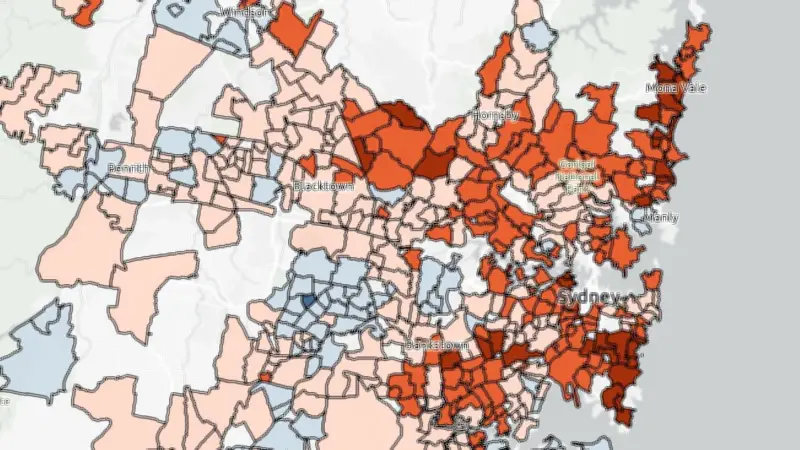
Brisbane and Adelaide have been among the fastest-growing markets, with Brisbane house prices rising $173,500 in the past year to a median of $1.236 million, and Adelaide's median house price reaching $1.025 million, up 85.3 per cent over five years. In contrast, house values in several inner Sydney suburbs have fallen by five to eight per cent over the past three months, with similar declines in Melbourne's inner east and southeast. SQM Research managing director Louis Christopher warned that buyers who used the federal government's five per cent deposit scheme could face negative equity.
Government Response
Treasurer Jim Chalmers defended the government's tax reforms, stating they aim to reduce competition for first-home buyers. He noted that the reforms mean 'when first-home buyers go to an auction they're less likely to be competing with someone whose already bought five, or 10 or 15 established homes'. Mr Oliver suggested that a resumption of interest rate cuts and resolution of the oil shock could strengthen prices next year, but the supply shortfall remains critical for the super cycle's future.