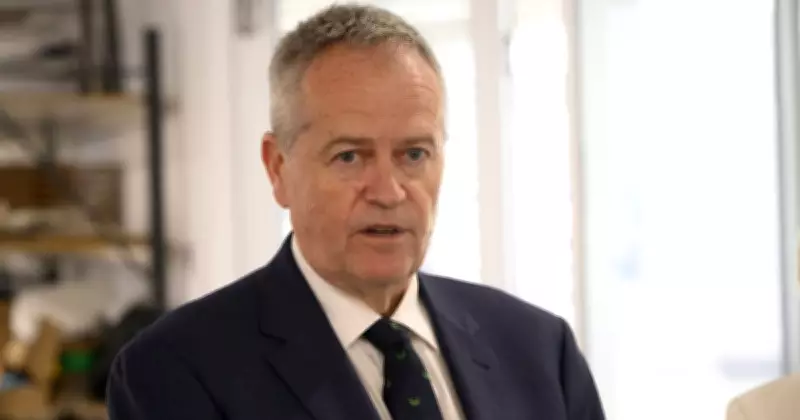
Bill Shorten Reaffirms Capital Gains Tax Reform Position Seven Years After Election Setback
Former Labor leader Bill Shorten has reiterated his belief that the core principles behind his controversial 2019 proposal to slash the capital gains tax discount remain valid, despite the policy contributing significantly to his election loss that year. Now seven years removed from that political defeat, Shorten maintains that inequality and middle-class tax breaks continue to plague Australia's property market.
The 2019 Proposal That Shaped an Election
During the 2019 federal election campaign, Shorten as Labor leader proposed halving the capital gains tax discount from 50 percent to 25 percent. This policy represented a direct challenge to a taxation arrangement that had remained unchanged since its introduction during John Howard's prime ministership in 1999. The moderate Labor platform sought to address what Shorten perceived as fundamental inequities in Australia's taxation system.
The policy proved deeply unpopular with voters, who instead returned Scott Morrison's coalition government. Despite this electoral rejection, Shorten continues to defend the philosophical underpinnings of his proposal, arguing that the structural issues it sought to address have only intensified in the intervening years.

Persistent Inequality in Taxation Systems
"Income is taxed too heavily, but property profits are taxed too little," Shorten asserted in recent reflections on his policy. He elaborated with specific examples: "Plumbers, nurses, academics, police pay top marginal rates, yet property is preferentially taxed too little."
The former opposition leader, who left politics in early 2025 and now serves as vice-chancellor of the University of Canberra, explained the mechanics behind his concern. Capital gains tax functions as part of the income tax system, applying to assets that appreciate in value during ownership. Howard's introduction of the flat 50 percent discount eliminated the previous requirement to calculate and deduct inflationary gains from taxable amounts.
This system creates particular advantages for property investors, who can often deduct losses on rental properties through negative gearing arrangements, thereby enhancing their overall gains. Meanwhile, primary residences remain entirely exempt from capital gains taxation.
Current Implications and Political Distance
Shorten declined to comment on potential policy changes under the current government but emphasized that capital gains tax settings continue to create systemic disadvantage. "You can do nothing all day, not be a teacher or a nurse or a firey, and instead just sit on a building, sell it and pay minimal tax on the profits," he observed.
He framed this as fundamentally unfair to Australia's 13.5 million pay-as-you-go taxpayers, whose earnings face immediate taxation without similar concessions. Notably, Shorten's 2019 proposal differed from contemporary housing crisis solutions anticipated from Treasurer Jim Chalmers, focusing instead on inequality reduction and government revenue enhancement.
"That was my principle in 2019. I still think that principle holds true, but I'm now out of politics," Shorten stated, adding: "I'll leave it to the Prime Minister and the Treasurer to work out what they are doing."
Legacy of a Controversial Policy
Seven years after his electoral defeat, Shorten's reflections highlight the enduring tension between political pragmatism and policy conviction. While his specific capital gains tax proposal contributed to Labor's 2019 loss, the former leader maintains that the underlying issues of taxation inequality and preferential treatment for property investments remain unresolved challenges for Australian policymakers.
The debate continues as Australia grapples with housing affordability, taxation fairness, and economic inequality—issues that Shorten's 2019 policy sought to address through structural reform of capital gains taxation arrangements.