For the first time in many generations, South Australia finds itself on the cusp of a truly transformative economic period. The state is looking at a long, predictable runway of industrial investment that could span an impressive twenty to thirty years. This presents a generational opportunity to reshape the local economy and secure prosperity for decades to come.
The Unprecedented Investment Pipeline
According to Hannah MacLeod, the executive director for South Australia and the Northern Territory at the McKell Institute, the scale and certainty of this investment are unprecedented in recent memory. Major projects and industrial expansions are lining up, promising to inject billions into the state's economy and create thousands of new jobs across various sectors.
A Single Hard Constraint Emerges
However, amidst this wave of optimism, there is one significant and hard constraint that could potentially derail this golden opportunity. MacLeod points to a critical shortage in the workforce as the primary barrier to fully capitalizing on the incoming investment. Without enough skilled and available workers, the state risks stalling its own economic momentum.

The issue is not merely about filling positions but ensuring that the workforce has the necessary skills and training to meet the demands of advanced industrial projects. This constraint threatens to slow down project timelines, increase costs, and ultimately limit the economic benefits that South Australia could otherwise reap.
Government and Industry Response
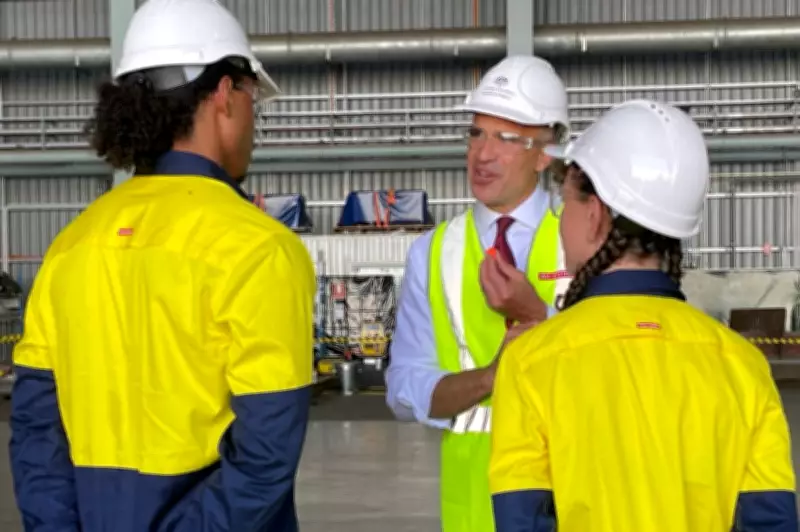
Premier Peter Malinauskas has been actively engaging with the situation, recently speaking with workers at BAE Systems to understand the challenges on the ground. His government faces the urgent task of developing strategies to address this workforce gap. Potential solutions include ramping up vocational training programs, incentivizing migration to fill skill shortages, and fostering stronger partnerships between educational institutions and industry leaders.
The success of these efforts will be crucial. If South Australia can overcome this workforce constraint, it stands to unlock a period of sustained economic growth and development. Failure to do so, however, could see the state miss out on what MacLeod describes as a once-in-a-generation chance to secure its economic future.
As the investment pipeline continues to develop, all eyes will be on how effectively South Australia can mobilize its human resources to meet the challenge. The next few years will be critical in determining whether the state can turn this promising opportunity into a lasting economic legacy.