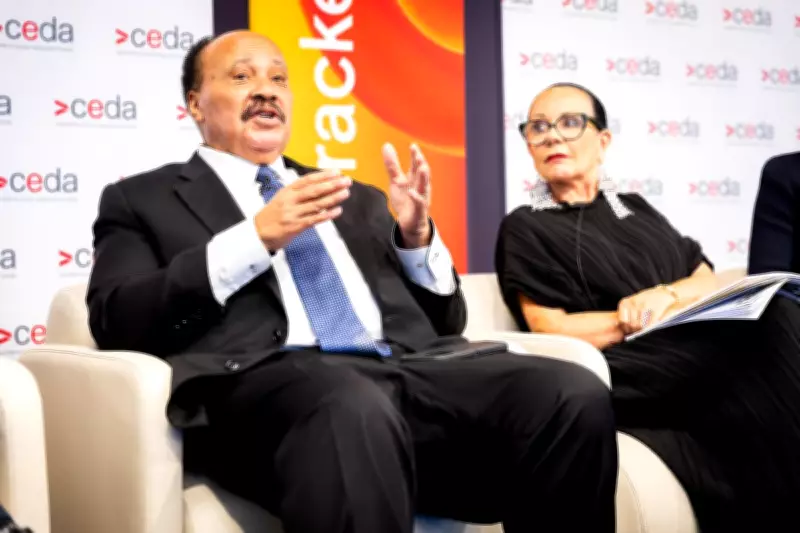
Global civil rights leader Martin Luther King III has delivered a powerful message during his Australian visit, asserting that true national prosperity hinges on embracing diversity and inclusion, particularly for Indigenous communities. Speaking at a Committee for Economic Development of Australia forum in Sydney, Mr King emphasised that corporate leaders must champion this cause to unlock Australia's full potential.
The Stark Reality of Indigenous Underrepresentation
Mr King's call for action comes against a backdrop of significant disparity in professional representation for Aboriginal and Torres Strait Islander peoples. Census employment data reveals a troubling gap: only about 13 per cent of First Nations workers hold professional roles, compared to approximately 25 per cent of their non-Indigenous counterparts.
This inequality becomes more pronounced at higher organisational levels. Managerial positions are occupied by just eight per cent of First Nations workers, versus 14 per cent of the non-Indigenous workforce. At the apex of corporate leadership, the situation is even more dire.

A Chasm at the Top
Aboriginal and Torres Strait Islander people hold a mere 0.4 per cent of senior leadership roles nationwide. The representation on ASX200 boards is virtually non-existent, accounting for about 0.002 per cent of all directorships. This glaring absence underscores the urgent need for systemic change.
Corporate Champions and Historical Acknowledgment
Mr King stressed that advancing opportunity requires corporate champions who are committed to creating inclusive institutions. "Oftentimes we exclude people, and certainly First Nations communities have been excluded," he noted, urging a shift towards intentional inclusion.
Adam Davids, Chief Executive of CareerTrackers—a non-profit facilitating paid internships for First Nations university students—echoed this sentiment. He described the current discussion as "fairly overdue" and emphasised the importance of acknowledging Australia's history of dispossession and exclusion. "We do need to learn from history, not repeat those mistakes," Mr Davids asserted.
A Marathon, Not a Sprint
Reflecting on his father's legacy, Mr King described the pursuit of equity as a long-term endeavour, warning against complacency. "Today, the United States is going through some transition, because it is trying to disconnect from some of its past, to exclude again," he observed, highlighting the need for sustained efforts to maintain progress.
Bold Leadership and Risk-Taking
Former WA Treasurer Ben Wyatt, the first Indigenous board director of an ASX-listed company, called for corporate Australia to demonstrate boldness. He identified two critical components for success:
- Fortitude: The ambition to make a tangible difference through the opportunities offered.
- Longevity: Recognising that meaningful outcomes require time and persistence.
Mr Wyatt advocated for taking calculated risks on Aboriginal talent, allowing individuals the opportunity to both succeed and learn from failure. "I don't want anyone, including First Nations people, protected from failure. It's how we learn from that development afterwards," he explained.
Building a Better Australia for All
Mr King framed the inclusion imperative as fundamental to national identity. "This is really about creating the best Australia that Australia can be for Australians—you can't do that by leaving out individuals who were first here," he declared.
He encouraged all Australians to actively participate in this narrative, fostering an environment where Indigenous professionals are not only visible but truly valued. With the right infrastructure and leadership, Mr King believes dramatic change is achievable, transforming diversity from a perceived weakness into Australia's greatest strength.