Former Qantas Pilot Issues Stark Warning Over Middle East Airspace Closure
A former Qantas pilot has issued a dire warning that airspace in the Middle East could remain shut for weeks as missile strikes continue to target major Gulf airports, leaving thousands of travellers stranded and intensifying concerns about aviation safety. The conflict escalated dramatically over the weekend after coordinated air strikes by the United States and Israel against Iran resulted in the death of leader Ayatollah Ali Khamenei and several senior military figures.
Retaliatory Strikes Force Immediate Airspace Closures
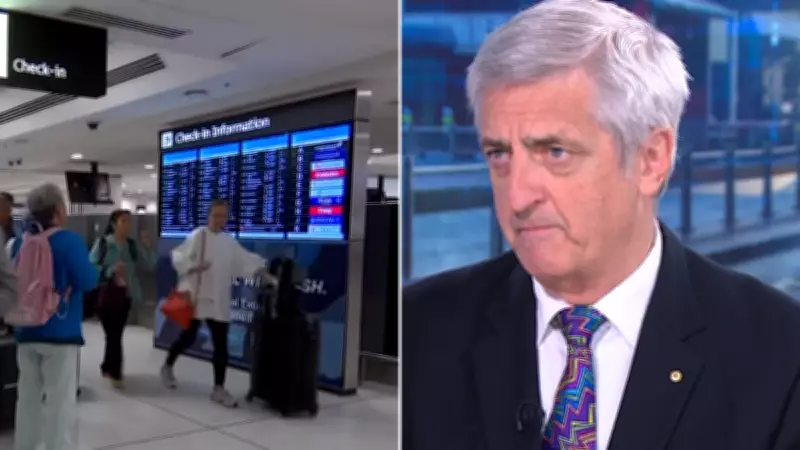
In response, Iran launched retaliatory missile strikes across the Gulf, targeting critical infrastructure, including major international airports in Dubai and Abu Dhabi. These attacks prompted immediate airspace closures across one of the world's busiest aviation corridors, severely disrupting global flight paths and stranding thousands of passengers. Former Qantas pilot Richard de Crespigny highlighted on Sunrise that the duration of this disruption hinges entirely on future developments in the region.
"If the regime does change and the military stands down and stops sending missiles into the Gulf airports like Qatar, Abu Dhabi, Dubai, if those missiles stop, then the airlines and the air routes will open up," de Crespigny stated. However, he cautioned that without a regime change, travellers could face weeks of delays as American forces work to eliminate missile launch sites, a process that could progress slowly without ground presence in Iran.

Aviation Safety Concerns and Historical Context
The crisis has revived memories of tragic incidents like Malaysia Airlines flight MH17, which was shot down over eastern Ukraine in 2014, killing all 298 people on board, including 38 Australians. De Crespigny acknowledged these concerns but noted that airlines have decades of experience navigating conflict zones and maintaining safe buffers around active hostilities. "The airlines have been navigating flights across or over and away from war zones really since the beginning of flight. So they're used to the chaos," he explained.
He advised passengers that for airlines currently operating, safety is assured, but recommended waiting for airlines to resolve issues or halting travel if necessary. Australian carriers, including Qantas, Singapore Airlines, and Malaysian Airlines, have already rerouted flights to Europe and the UK via two alternative paths to avoid Iranian airspace.
Alternative Flight Routes and Travel Insurance Warnings
One route diverts through Afghanistan and Turkmenistan, passing through Georgia to the Black Sea, east of Iran and south of Russia. The other travels via Amman to Saudi Arabia, up to Egypt and the Red Sea, well west of Iran. De Crespigny assured that both routes are safe, adding only about 15 minutes to flight time, and emphasized that aircraft already airborne are not at immediate risk of being shot down.
For those with planned travel through the region, de Crespigny strongly advised waiting for airlines to organise alternative arrangements. He also warned that standard travel insurance policies typically do not cover war-related disruptions, leaving travellers potentially exposed to significant financial losses. This situation underscores the broader impact of geopolitical tensions on global aviation and passenger safety.