Brisbane Company Pioneers Hypersonic Aircraft Technology for Revolutionary Air Travel
A Brisbane-based aerospace firm is making groundbreaking strides in aviation with the development of a hypersonic aircraft that could dramatically transform international air travel. The company, Hypersonix, is testing technology that enables aircraft to travel at speeds exceeding five times the speed of sound, potentially cutting flight times between major global cities by over 80 percent.
From Sydney to London in Just 90 Minutes
The most astonishing application of this technology is the prospect of flying from Sydney to London in approximately 90 minutes, compared to the current 14-hour journey. This represents a seismic shift in long-haul travel, making intercontinental trips as quick as domestic flights. The aircraft is engineered to achieve Mach 7, which is seven times the speed of sound, far surpassing the capabilities of the retired Concorde that operated at Mach 2.
Three Decades of Research and Development
Dr Michael Smart, co-founder of Hypersonix, revealed that this breakthrough is the culmination of 30 years of dedicated research and development. "I've been working on this technology for about 30 years of my career at NASA Langley in Virginia, the University of Queensland, and now in our company, Hypersonix," Dr Smart stated. "So yeah, it's been a 30-year overnight success, I would say." This extensive background underscores the scientific rigor and innovation driving the project forward.

Initial Testing and Future Commercial Visions
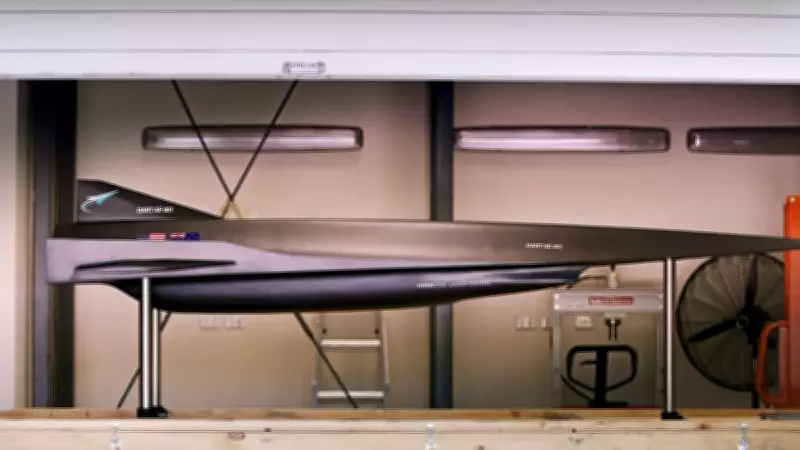
The current phase involves testing an autonomous vehicle measuring 3.5 metres in length, designed without passengers to validate the technology safely. However, Hypersonix CEO Matt Hill envisions a future where this technology revolutionises commercial aviation. "With this sort of technology being available, we do envisage that flights overseas will be much, much faster than they are right now," Mr Hill explained. "It's not going to take 14 hours. It's going to take two hours. That's the big difference."
Passenger Experience and Safety Considerations
Despite concerns about the physical effects of travelling at such extreme speeds, Dr Smart assures that passengers would experience a smooth journey once the aircraft reaches cruising altitude. "Being at very, very high speed and you're staying at a constant speed, you don't feel anything," he clarified. "Once we get up to Mach 7, it'll be a pretty smooth flight. You may have to hold onto your coffee, but it should be a pretty smooth flight for most of the way." The aircraft is designed to take off and land horizontally on conventional runways, similar to standard commercial planes, ensuring a familiar experience for travellers despite the revolutionary speed.
Implications for Global Aviation and Beyond
This development has profound implications for the aviation industry, potentially reducing travel times across the globe and enhancing connectivity between continents. The technology could also spur advancements in other sectors, such as defence and space exploration, by pushing the boundaries of speed and efficiency. As Hypersonix continues its testing, the world watches closely, anticipating a new era of hypersonic travel that could redefine how we perceive distance and time in air transportation.