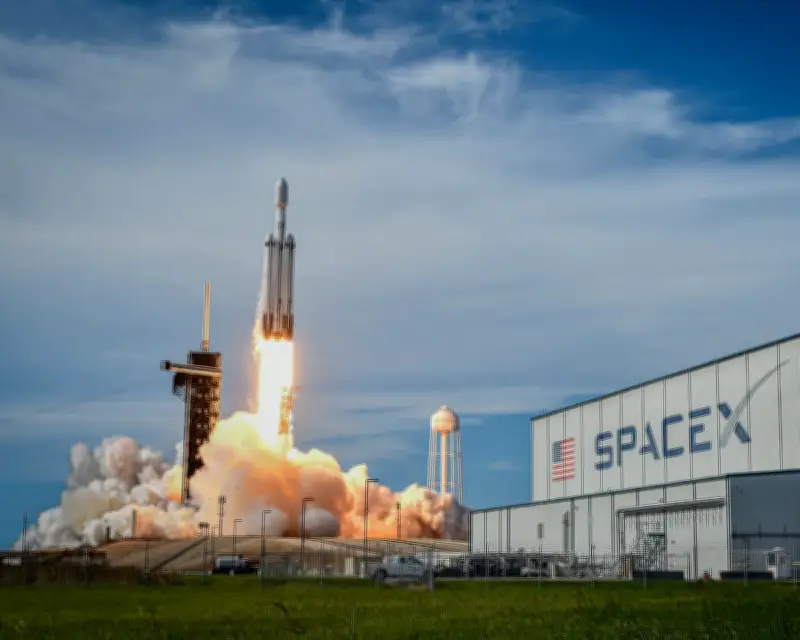
SpaceX, the private space exploration company founded by Elon Musk, has officially filed for an initial public offering (IPO) valued at a staggering $500 billion, making it the largest IPO in history. The filing, submitted to the U.S. Securities and Exchange Commission on Friday, sent shockwaves through global financial markets as investors scrambled to assess the implications.
Historic Valuation and Market Impact
The $500 billion valuation would surpass the combined market capitalizations of many of the world's largest companies, including Tesla, Apple, and Saudi Aramco. Analysts predict that the IPO could catapult Musk's net worth beyond $1 trillion, making him the world's first trillionaire. Musk currently holds a 42% stake in SpaceX, which would be worth approximately $210 billion at the offering price.
The IPO is expected to be oversubscribed, with institutional investors and retail traders alike eager to gain exposure to the space economy. SpaceX's Starlink satellite internet service, which now has over 2 million subscribers globally, is seen as a key driver of revenue growth. The company also has a lucrative contract with NASA for lunar missions and a dominant position in the commercial launch market.

Details of the Filing
SpaceX plans to list on the Nasdaq under the ticker symbol "SPCE" (a nod to its space exploration roots). The company will offer 100 million shares at an estimated price range of $4,500 to $5,000 per share, raising between $450 billion and $500 billion. Underwriters for the deal include Goldman Sachs, Morgan Stanley, and JPMorgan Chase.
The prospectus reveals that SpaceX generated $12 billion in revenue in 2025, with a net profit of $3.5 billion. However, the company warns that it faces significant risks, including regulatory hurdles, competition from rivals like Blue Origin and United Launch Alliance, and the technical challenges of its Starship program, which is critical for Musk's vision of colonizing Mars.
Market Reaction and Expert Opinions
Global stock markets reacted positively to the news, with the S&P 500 and Nasdaq futures surging in early trading. The Dow Jones Industrial Average rose 1.2% as investors cheered the potential for a new era of space investment. However, some analysts expressed caution, noting that the valuation is extremely high relative to earnings. "SpaceX is a remarkable company, but a $500 billion valuation implies that it will dominate the space industry for decades to come," said Sarah Johnson, an analyst at Morningstar. "While that's possible, it's not guaranteed, and investors should be prepared for volatility."
Elon Musk, who also serves as CEO of Tesla and X (formerly Twitter), has been vocal about his desire to take SpaceX public to fund its ambitious goals. In a tweet following the filing, Musk said, "This IPO will accelerate humanity's journey to becoming a multi-planet species. Let's reach for the stars!"
What This Means for Investors
Retail investors who have been unable to buy SpaceX shares on the private market will now have the opportunity to participate. However, the high share price may deter some, though brokerages like Robinhood and Fidelity are expected to offer fractional shares. The IPO is likely to be one of the most anticipated events in financial history, with roadshows beginning next week.
SpaceX's IPO also raises questions about the broader space economy, which is projected to be worth $1 trillion by 2040. Other space companies, such as Virgin Galactic and Rocket Lab, may see increased interest as a result. But SpaceX's sheer scale could overshadow competitors, potentially reshaping the industry.
The listing is expected to occur in early August, pending SEC approval. If successful, it would not only make history but also provide SpaceX with the capital needed to pursue its most audacious goals, including sending humans to Mars by 2030.