State Government Proposes Accepting 'Residual Risks' for Abandoned Mines
The Western Australian Government is proposing a significant policy overhaul that would permit abandoned mines to be officially declared "rehabilitated" even if they continue to pose ongoing risks to the environment and community safety. This controversial move has drawn sharp criticism from conservation advocates and industry observers who argue it undermines established safeguards for proper land remediation.
Policy Changes and Industry Concerns
Under the proposed amendments to the Abandoned Mines Policy, the Department of Mines, Petroleum and Exploration would have the authority to sign off on a mine site as "managed or rehabilitated" if any residual risk is deemed acceptable by the department's director general. However, the specific definition of what constitutes a "residual risk" remains undefined in the proposal documents.
A department spokesman stated that the intent of this addition aligns with the current Abandoned Mines Policy introduced in 2016, emphasizing a risk-based approach to decision-making that reduces threats to safety and the environment. Yet critics point out that neither the current policy nor the Mining Rehabilitation Fund Act contains any reference to accepting residual risks for rehabilitated mine sites.

Current Standards Versus Proposed Changes
Current State regulations require that a mine be considered rehabilitated only when it meets strict criteria: being physically safe for humans and animals, geotechnically stable, geochemically non-polluting and non-contaminating, and capable of sustaining an agreed post-mining land use. Conservation Council WA executive director Matt Roberts argues that this clear standard directly conflicts with the notion that residual risks could be approved by departmental officials.
"It is profoundly disappointing that a WA Labor Government, which frequently defends its environmental credentials, would seek to weaken mine closure laws originally established under the Barnett Liberal Government," Mr Roberts stated. "Including this residual risk clause in mining policy represents a dangerous and irresponsible regression in standards for mine closures across our State."
Financial Implications and Industry Perspectives
Industry insiders suggest the State Government is eager to introduce the residual risk clause as a "get out of jail free card" should cleanup costs for rehabilitation projects threaten the financial viability of the Mining Rehabilitation Fund. This pooled industry fund, to which all WA miners contribute, covers cleanup expenses when mine owners cannot afford remediation.
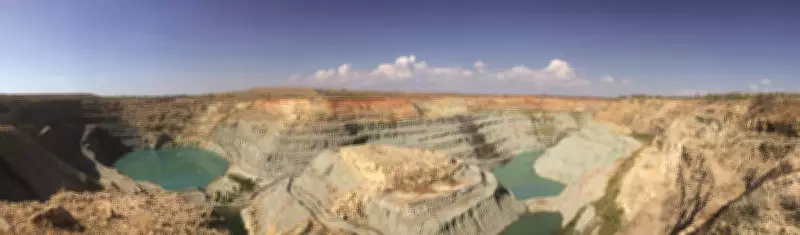
The MRF's most substantial undertaking to date—the Ellendale diamond mine—serves as a stark example of rehabilitation cost overruns. Initially estimated at $40 million when its owner collapsed in 2015, the cleanup liability has ballooned to over $120 million. Based on Ellendale's escalating expenses, two derelict nickel mines near Kalgoorlie are projected to cost the State more than $300 million to rehabilitate.
Broader Implications and Future Directions
Mr Roberts emphasized that if mining companies cannot meet established rehabilitation standards, they should not be permitted to operate, or alternatively, mine closure bonds should be reinstated to ensure adequate funding for proper site remediation. Public submissions regarding the updated Abandoned Mines Policy closed in late February, and the department is currently evaluating all feedback received.
The MRF received $62 million during the 2025 financial year, with its balance standing at $356 million as of June 30. This financial context underscores the ongoing challenges of funding comprehensive mine rehabilitation across Western Australia's extensive mining landscape.